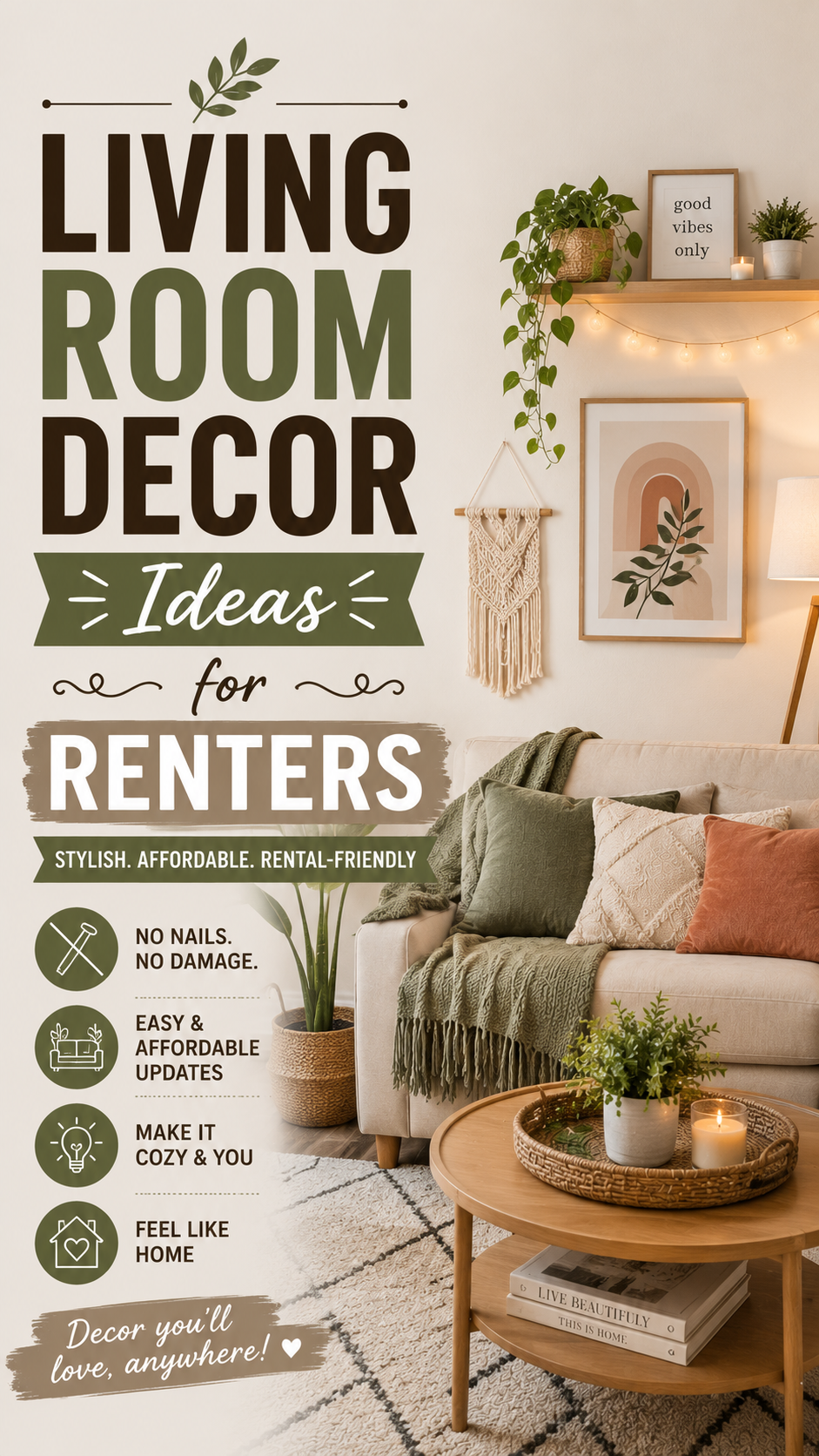
Why does “you can’t paint the walls” feel like a design death sentence?
It’s not. Some of the best living rooms out there belong to renters who got creative with what they were actually allowed to touch. No painting, no permanent fixtures, no losing your deposit. Just smart, temporary decor that still looks intentional.
Renting shouldn’t mean living in a beige box until you move out. It means decorating with a different set of rules, that’s all. And honestly, some of those rules push you toward better design choices anyway.
Here’s how to make a rental feel like home without upsetting your landlord. 🏠
What You’ll Need
- Sofa in a neutral or removable slipcover fabric
- Coffee table (no assembly into walls required)
- Large area rug to anchor the space and hide flooring you don’t love
- Removable wallpaper or peel-and-stick wall panels
- Command strips and hooks (heavy-duty for mirrors and art)
- Tension curtain rods (no drilling required)
- Floor lamp and table lamp
- Throw pillows and a couple of blankets
- Freestanding shelving unit or ladder shelf
- Large leaning mirror
- Plants in floor planters (no wall mounting needed)
- Removable LED light strips (optional, for ambiance)
Tools You Might Need
- Measuring tape
- Level
- Scissors or a utility knife (for wallpaper and adhesive strips)
- A soft cloth (for smoothing peel-and-stick materials)
No drill or hammer required for most of this list, which is kind of the entire point.
Pro Styling Tips
1. Anchor the room with a rug, not the walls. Since you can’t always change flooring or paint, a large rug does most of the visual heavy lifting.
2. Use furniture to divide space instead of walls. A bookshelf or console table can define a living room “zone” in an open floor plan without touching a single wall.
3. Command strips are rated for a reason. Use the right ones. Check the weight limit on the package and match it to your item. Mirrors and shelves need the heavy-duty strips, not the light picture ones.
4. Tension rods are your best friend. Curtain rods, small shelf supports, and even room dividers can work with tension hardware instead of screws.
5. Keep receipts and packaging for anything mounted. If you ever need to return adhesive hardware or hooks that failed, having the packaging makes it painless.
Substitutions and Variations
| Element | Budget Swap | Small Space Version | Large Space Version |
|---|---|---|---|
| Wall color | Peel-and-stick wallpaper on one accent wall | Small removable wallpaper behind a bed or console | Full accent wall with removable paper |
| Art | Leaning art on the floor instead of hanging | One leaning piece against the wall | Layered leaning gallery of 2 to 3 pieces |
| Shelving | Ladder shelf instead of built-ins | Slim ladder shelf in a corner | Freestanding bookshelf as a room divider |
| Lighting | Plug-in wall sconces with cord covers | One floor lamp | Floor lamp plus table lamp plus string lights |
| Curtains | Tension rod with clip rings | Café curtains for shorter windows | Floor-length curtains on a wide tension rod |
Style variations to try:
- Renter-friendly modern: Clean lines, neutral rug, leaning mirror, minimal wall treatments.
- Renter-friendly boho: Layered rugs, macrame, and lots of plants that don’t require wall mounting.
- Renter-friendly cozy: Extra throws, warm lighting, and a peel-and-stick wallpaper accent wall.
Make Ahead / Prep Tips
- Read your lease before buying anything, since some buildings have specific rules on adhesive products or window treatments.
- Take photos of your walls and floors before decorating so you have a clear “before” for your move-out comparison.
- Test any peel-and-stick product on a small hidden section of wall first.
- Measure windows before buying tension rods, since they need to be the right width to hold tension securely.
- Keep a small toolkit with Command strips, extra adhesive, and a level in one place for quick fixes.
Step-by-Step: How to Get the Look
Step 1: Start with the Rug
Choose a rug large enough to anchor your seating area. This instantly makes the space feel more finished, even before anything else is added.
Step 2: Arrange Furniture Away from the Walls
Pull your sofa slightly off the wall if space allows. It makes the room feel more considered instead of pushed to the edges.
Step 3: Add a Peel-and-Stick Accent
Choose one wall, usually behind the sofa, and apply removable wallpaper or panels for a focal point.
Step 4: Hang Art and Mirrors with Heavy-Duty Strips
Follow the weight guidelines on the packaging and test the strip’s hold before fully letting go of the piece.
Step 5: Install Tension Rod Curtains
Measure your window width, add a couple of inches for overlap, and mount the tension rod without any tools.
Step 6: Add Lighting Layers
Place a floor lamp near your seating and a table lamp on a side table. Use plug-in sconces if you want wall lighting without hardwiring.
Step 7: Style with Shelving
Set up a freestanding shelf with books, a small plant, and a woven basket for storage.
Step 8: Finish with Leaning Decor
Lean a large mirror or framed art against the wall instead of hanging it for an easy, damage-free focal point.
Maintenance and Upkeep
- Check Command strips every few months, since heat and humidity can weaken the adhesive over time.
- Vacuum rugs regularly, especially along high-traffic paths.
- Reposition leaning mirrors and art occasionally to prevent wall marks from constant contact.
- Dust freestanding shelves weekly to keep the space feeling fresh.
- Keep peel-and-stick wallpaper edges pressed down, especially near corners where lifting starts first.
FAQ
Will Command strips actually hold a mirror? Yes, as long as you use the heavy-duty version rated for the mirror’s weight and follow the wait time before hanging anything on them.
Can I remove peel-and-stick wallpaper without damaging paint? Most quality removable wallpaper comes off cleanly if applied and removed correctly, but always test a small section first.
What if my lease doesn’t allow any wall attachments at all? Lean art and mirrors against the wall, use freestanding shelving, and rely on rugs and furniture placement to define the space.
How do I make a rental feel less temporary? Invest in furniture and lighting you’ll take with you to your next place, since those pieces carry the most visual weight.
Is it worth buying tension rods instead of standard curtain rods? Yes, if you can’t drill into the walls. They hold most lightweight to medium curtains well and take seconds to install or remove.
Wrapping Up
Renting doesn’t mean your living room has to feel unfinished until you own a place. A great rug, the right lighting, and a few damage-free tricks can make a space feel completely yours.
Start with one change, like the rug or a leaning mirror, and build from there.
Have you found any rental-friendly decor hacks that worked well for you? Share them in the comments.