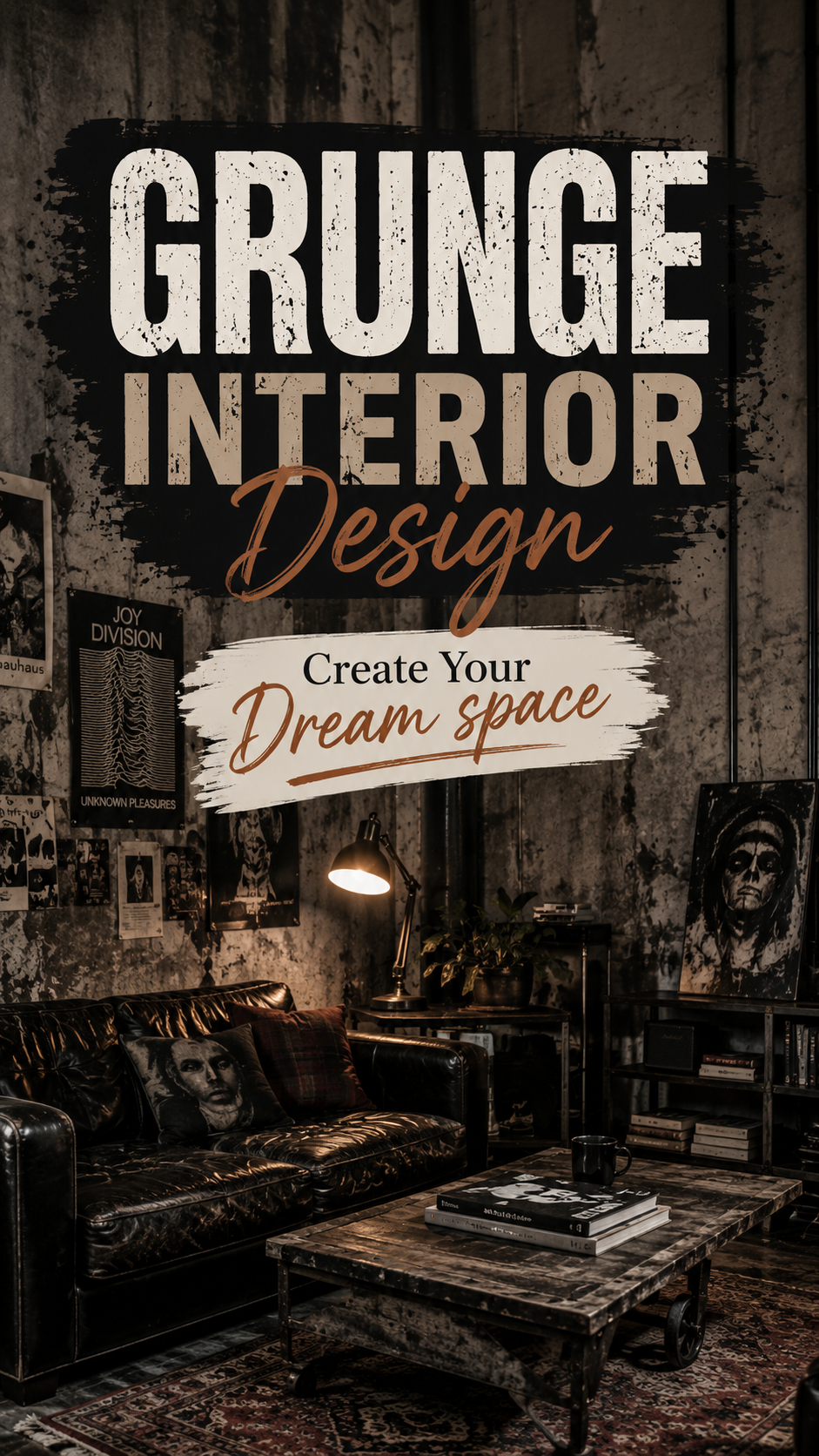
Most “edgy” rooms look like a Pinterest board threw up on a wall.
Grunge is different. It’s messy on purpose, warm underneath the chaos, and it feels like a room that’s actually lived in instead of staged for a photo.
If you’re tired of matching furniture sets and beige everything, this one’s for you. 🖤
What Even Is Grunge Interior Design?
Think 90s Seattle. Flannel, worn leather, vinyl records stacked sideways, a lamp that doesn’t match the couch and somehow that’s the point.
Grunge design pulls from punk, thrift stores, and a “who cares if it’s perfect” attitude. It leans into texture, low lighting, and layered decor instead of clean lines and symmetry.
It’s the opposite of minimalism. And honestly, that’s why people love it.
What You’ll Need
Here’s your starter list. You don’t need everything at once.
- Worn leather or faux leather sofa (thrifted is even better)
- Vintage area rug with visible wear
- Distressed wood coffee table or side table
- Band posters, gig flyers, or vintage prints for the walls
- String lights or a single low-glow floor lamp
- Layered throw blankets (flannel, wool, knit)
- Mismatched candles or candle holders
- A record player or vinyl records (functional or purely decorative)
- Metal accents: chains, exposed hardware, industrial hooks
- Plants in weathered or metal pots
- Dark curtains or no curtains at all
- Old books, zines, or magazines stacked casually
Pro Styling Tips
1. Layer, don’t match. Grunge lives and dies on texture. Mix flannel with velvet, leather with knit. If two things match perfectly, swap one out.
2. Lighting makes or breaks it. Skip the overhead light. Use lamps, string lights, or candles instead. Warm, low light is 80% of the vibe.
3. Let the walls tell a story. Gig posters, torn edges, taped-up prints. Nothing framed too perfectly. A slightly crooked poster reads more authentic than a gallery wall.
4. Distress on purpose. A little wear on furniture edges, a faded rug, a scuffed table leg. If your pieces look too new, sand a corner or use them daily until they soften.
5. Keep one grounding neutral. Black, deep brown, or charcoal walls or furniture keep the space from feeling chaotic. Everything else can be loud around that anchor.
Tools You’ll Need
If you’re distressing furniture or hanging décor, keep these on hand:
- Sandpaper (medium and fine grit)
- Hammer and small nails or picture hooks
- Staple gun (for fabric or posters)
- Drill (for shelving or metal hooks)
- Painter’s tape
- Fabric glue or hot glue gun
Substitutions and Variations
Budget swaps:
- Skip the leather sofa, use a slipcover in dark neutral tones instead
- Print your own vintage-style posters instead of buying originals
- Thrift store candle holders instead of new metal ones
Small space version:
- One statement wall of posters instead of covering every wall
- A single oversized floor lamp instead of multiple light sources
- Fold-down or wall-mounted shelving to keep floor space open
Large space version:
- Layer multiple rugs for a lived-in, collected-over-time feel
- Add a reading nook with its own lamp and blanket layering
- Use room dividers or curtains to break up open floor plans
Make Ahead / Prep Tips
Before you buy anything, do this first.
- Measure your space. Grunge relies on layering, and layering needs room to breathe without feeling cluttered.
- Start a mood folder. Save images that feel right so you’re not guessing at the store.
- Hit thrift stores early. The best grunge pieces are secondhand. Give yourself weeks, not days, to find them.
- Test your lighting plan first. Move your lamps around before committing to furniture placement.
Step-By-Step: How To Build The Look
- Pick your anchor piece. Usually the sofa or bed. This sets your color direction.
- Choose your wall treatment. Dark paint, exposed brick look, or a full poster wall.
- Layer your textiles. Rug first, then throws, then pillows in mismatched but complementary tones.
- Add your lighting. Lamps and string lights before anything else goes on shelves.
- Style your surfaces. Books, candles, records, small plants. Group in odd numbers, never symmetrical.
- Hang your art last. Once everything else is in place, you’ll see what walls actually need something.
Budget Breakdown
| Item | Budget Option | Mid-Range | Splurge |
|---|---|---|---|
| Sofa | Slipcover on existing couch ($40) | Thrifted leather ($200) | New distressed leather ($900+) |
| Rug | Flea market find ($30) | Vintage-style area rug ($150) | Authentic vintage rug ($400+) |
| Wall art | Printed posters ($20 total) | Framed vintage prints ($100) | Original art pieces ($300+) |
| Lighting | String lights ($15) | Vintage floor lamp ($80) | Designer statement lamp ($250+) |
Style Variations
Grunge + Boho: Add macrame, more plants, and warmer earth tones.
Grunge + Industrial: Lean into exposed metal, concrete textures, and cooler grays.
Grunge + Minimalist: Keep the color palette but simplify the layering. Fewer pieces, still moody.
Room Pairing Suggestions
Grunge works best in bedrooms and living rooms, but it also shows up beautifully in:
- Home offices (think creative studio energy)
- Reading nooks
- Basement lounges or media rooms
Maintenance and Upkeep
- Vacuum rugs weekly, the texture hides dust fast
- Rotate throw blankets so they don’t flatten
- Dust wall art and frames monthly
- Re-tape or replace curling posters as needed
- Refresh candles before they burn to nothing, half-used candles still add to the mood
FAQ
Is grunge interior design expensive? Not if you thrift. Most of the look comes from secondhand and DIY pieces, not designer furniture.
Will this make my room feel dark or small? It can if you’re not careful with lighting. Layer multiple light sources instead of relying on one dim lamp.
Can I do grunge in a rental? Yes. Skip the paint, use removable wall art, and focus on textiles, lighting, and furniture instead.
How do I keep it from looking messy instead of intentional? Anchor everything around one neutral tone and keep clutter off the floor. Layered doesn’t mean disorganized.
Wrapping Up
Grunge interior design isn’t about following rules, it’s about building a room that feels like you actually live in it.
Start with one piece. A lamp, a rug, a poster you can’t stop thinking about. Build around it slowly and let the space grow some personality over time.
Have you tried this look in your own home? Drop a comment below and tell me what you started with.