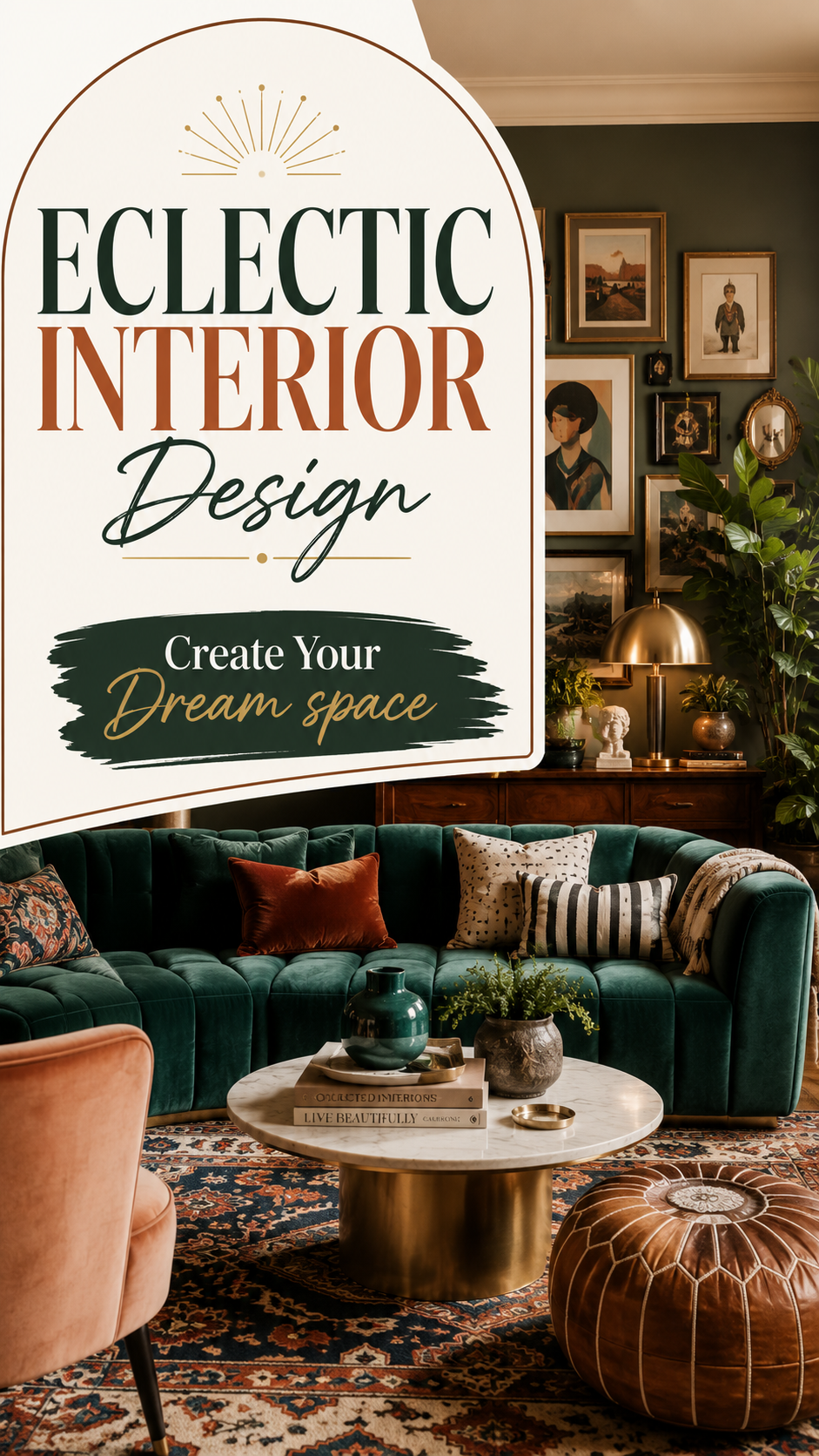
Can a room really have a vintage lamp, a modern sofa, and a thrifted rug from three different decades sitting together and somehow look pulled together instead of chaotic?
Yes. And once you see how, you won’t be able to unsee it.
Eclectic design gets a bad reputation. People hear “mix everything” and picture a garage sale exploded in their living room. But real eclectic style is one of the most controlled looks out there. It just hides its rules really well.
This post breaks those rules down so you can build a space that feels collected, not cluttered. Personal, not random. 🎨
What You’ll Need
- A neutral base rug (jute, wool, or a faded vintage style)
- One statement seating piece (sofa, armchair, or bench)
- 2 to 3 accent chairs in different styles or eras
- A mix of side tables (at least one wood, one metal or glass)
- Layered lighting: a floor lamp, a table lamp, and one overhead fixture
- Throw pillows in varied patterns (aim for 3 to 5 fabrics max)
- A gallery of wall art or mirrors in mismatched frames
- Plants, real or faux, in at least two different pot styles
- Textiles: a throw blanket, a woven basket, or a tapestry
- A few vintage or antique finds (books, ceramics, small furniture)
- Decorative objects with personal meaning (travel finds, family pieces)
Pro Styling Tips
1. Pick one thread that ties it all together. It could be a color, a material, or a shape. Repeat it three or more times across the room so your eye has something familiar to land on.
2. Balance old with new. A grandma-era armchair sitting next to a sleek glass table works because the contrast is intentional, not accidental.
3. Group in odd numbers. Threes and fives read as curated. Pairs read as matched sets, which is the opposite of the eclectic look.
4. Let one piece be the loudest. Every eclectic room needs a hero. A bold chair, a huge mirror, a wild-patterned rug. Pick one, and let everything else support it quietly.
5. Leave breathing room. Eclectic doesn’t mean crowded. Empty wall space and open floor area let your eye rest between all the visual variety.
Tools You’ll Need
- Tape measure
- Level (for hanging art and mirrors)
- Hammer and picture hooks
- Drill (for shelving or securing furniture)
- Glue gun (for small styling fixes on baskets, frames, or fabric)
- Furniture pads (to protect floors when arranging and rearranging)
Substitutions and Variations
On a tight budget? Thrift stores, estate sales, and Facebook Marketplace are basically eclectic design’s natural habitat. Swap “vintage find” for “secondhand find” and you’ll save hundreds without losing the look.
Small space version: Stick to one or two accent pieces instead of a full mix. Use a gallery wall to add variety vertically instead of crowding the floor.
Large space version: Break the room into smaller zones (a reading nook, a conversation area) so the eclectic mix doesn’t feel like too much all at once.
Style leanings within eclectic:
| Aesthetic Pull | Color Palette | Signature Pieces |
|---|---|---|
| Boho eclectic | Warm earth tones | Rattan, macrame, layered rugs |
| Modern eclectic | Neutrals with one bold pop | Clean lines mixed with a vintage statement piece |
| Maximalist eclectic | Rich, saturated colors | Pattern on pattern, gallery walls, brass accents |
| Coastal eclectic | Soft blues and sandy neutrals | Woven textures, driftwood, antique brass |
Make Ahead / Prep Tips
- Measure your space before shopping so you’re not guessing on furniture scale
- Start a mood board (physical or on Pinterest) so your color thread stays consistent
- Shop over time instead of all at once. Eclectic rooms are built, not bought in a single trip
- Photograph pieces you already own so you can plan around them before adding anything new
Step-by-Step: How to Style an Eclectic Space
Step 1: Choose your anchor piece. This is usually your sofa or main seating. Everything else gets built around it.
Step 2: Set your color thread. Pick one or two colors that will show up throughout the room, even in small doses.
Step 3: Layer your rug and flooring. A neutral base rug grounds the space so the rest of the mix has somewhere to sit visually.
Step 4: Add your seating mix. Bring in accent chairs from different eras or styles. This is where the “eclectic” really starts to show.
Step 5: Layer your lighting. Combine at least two light sources at different heights. A floor lamp and a table lamp instantly add depth.
Step 6: Style your surfaces. Group objects in odd numbers, vary the heights, and mix textures like ceramic, wood, and metal.
Step 7: Build your gallery wall. Mix frame styles and sizes. Leave slightly uneven spacing. Perfect symmetry works against the eclectic vibe.
Step 8: Add greenery and texture last. Plants and textiles soften all the mixed materials and make the room feel lived in.
Step 9: Step back and edit. Remove one item. Eclectic rooms almost always look better with slightly less than you think.
Maintenance and Upkeep
- Dust vintage and antique pieces gently, avoid harsh cleaners on aged finishes
- Rotate accessories seasonally so the space keeps evolving instead of feeling static
- Vacuum layered rugs regularly, especially where edges overlap
- Check plant pots for drainage if you’re mixing real greenery with wood or metal surfaces
- Re-evaluate your gallery wall every few months. Add or remove a piece to keep it feeling current
FAQ
Does eclectic mean I can just buy whatever I like? Not quite. You want variety, but it works best with a shared thread like color, material, or scale tying the pieces together.
How many styles is too many to mix? Two or three distinct styles is the sweet spot. Beyond that, the room starts to lose its focal point.
Is eclectic design expensive? It can be budget-friendly since so many pieces come from thrift stores, hand-me-downs, and secondhand markets.
Can eclectic design work in a rental? Yes. Since most of the look comes from furniture, textiles, and art rather than built-ins, it’s one of the easiest styles to bring with you when you move.
What’s the biggest mistake people make with eclectic decor? Skipping the unifying thread. Without a repeated color, material, or shape, the room reads as random instead of curated.
Wrapping Up
Eclectic design rewards patience. It’s built piece by piece, not bought in a single afternoon, and that’s exactly what makes it feel so personal once it comes together.
Start with one anchor piece, pick your color thread, and let the room grow from there.
Have you tried mixing styles in your own space? Drop a comment and tell me what’s working (or what’s driving you a little crazy).