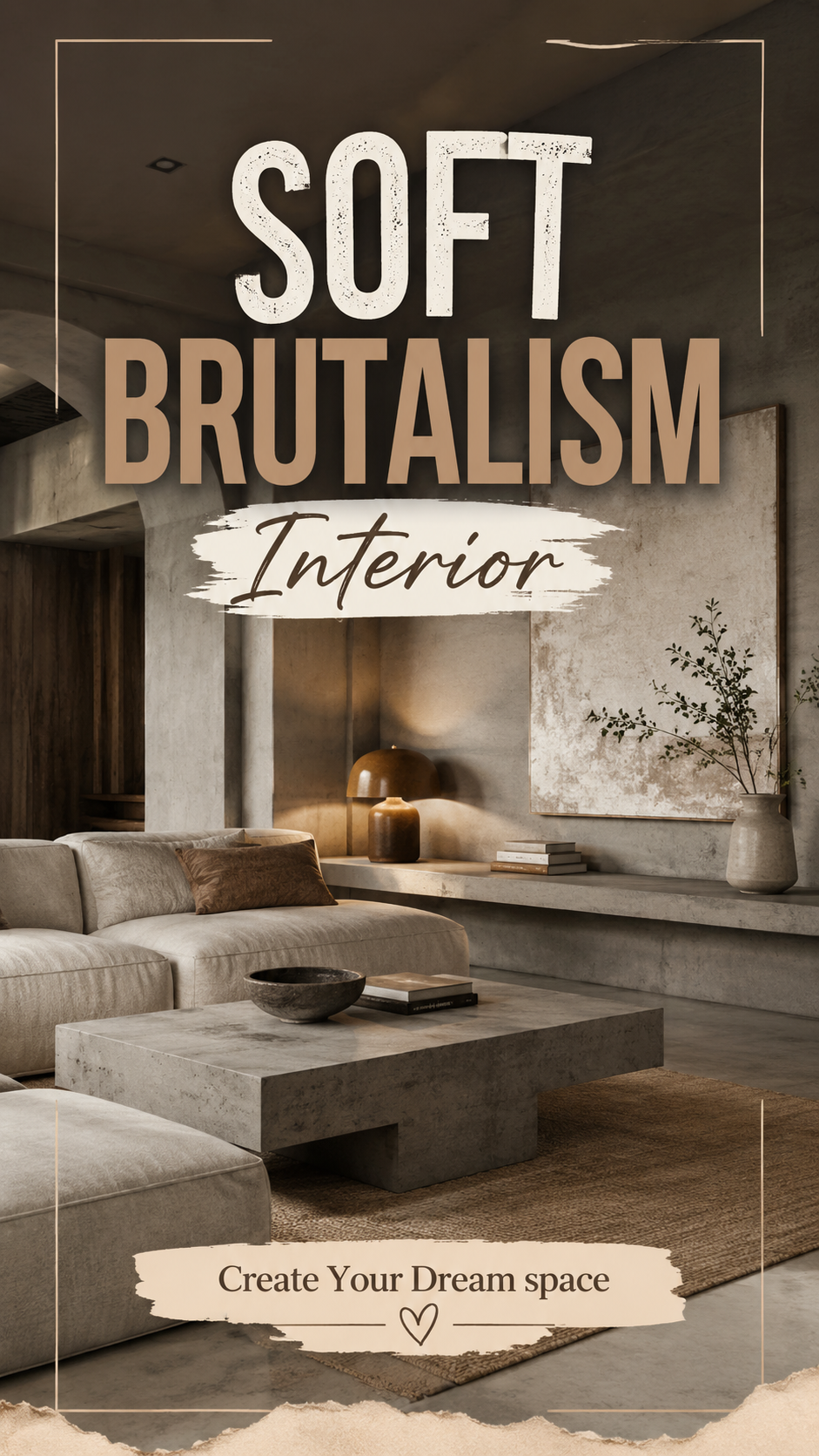
Raw concrete walls and a cozy boucle chair sound like they shouldn’t work together. They do. That’s the whole point of soft brutalism.
This is the design trend taking over Pinterest boards right now, and once you see it, you can’t unsee it. Rough textures. Warm neutrals. Curved furniture sitting next to hard architectural lines. It shouldn’t feel inviting. It does anyway.
If your space feels either too cold and industrial, or too soft and forgettable, soft brutalism might be the fix. It’s the sweet spot between the two.
Here’s everything you need to pull it off in your own home, room by room.
What Is Soft Brutalism, Really?
Brutalism started as an architecture movement built on raw concrete, bold geometric shapes, and zero decoration. Think government buildings from the 1960s and 70s. Impressive, but not exactly cozy.
Soft brutalism takes that same bones (raw materials, sculptural shapes, muted tones) and warms it up. You add curves. You add texture you want to touch. You add warm lighting instead of harsh fluorescents.
The result feels grounded and calm, not cold.
What You’ll Need
- Textured area rug (jute, wool, or chunky weave)
- Boucle or linen upholstered chair
- Low-profile sofa in a neutral tone
- Curved wood or stone coffee table
- Plaster or concrete-effect wall paint (or limewash)
- Woven or ceramic pendant light
- Sculptural floor lamp
- Stone, clay, or ceramic vases (a few different heights)
- Linen curtains in an off-white or oatmeal shade
- Wood or rattan storage baskets
- Large-leaf plant (fiddle leaf fig, monstera, or a dried arrangement)
- Throw pillows in nubby, natural fabrics
- A few art pieces with organic, abstract shapes
Full Step-by-Step Instructions
Step 1: Start With Your Wall Color
Skip stark white. Go for warm plaster tones, greige, sand, or soft clay. These colors mimic raw concrete without making the room feel like a parking garage.
Limewash paint is a great shortcut here. It gives you that mottled, textured look with almost zero effort.
Step 2: Choose One “Hard” Statement Piece
Every soft brutalist room needs one element that feels architectural and raw. This could be:
- A concrete-look coffee table
- A stone side table
- An exposed brick or textured accent wall
- A sculptural fireplace surround
Pick just one. This isn’t about filling the room with hard edges. It’s about contrast.
Step 3: Balance It With Something Soft and Curved
Right next to your hard piece, add something round and touchable. A boucle armchair. A curved sofa. A rounded ottoman.
This pairing is the entire trick. Hard next to soft. Sharp next to round. That tension is what makes the room interesting.
Step 4: Layer in Natural Texture
Add a jute or wool rug. Linen curtains. Rattan baskets. Wood furniture with visible grain.
Nothing glossy. Nothing plastic. Everything should feel like it came from the earth.
Step 5: Keep Your Color Palette Tight
Stick to three to five tones max: warm white, sand, clay, charcoal, maybe one deep green or rust accent.
Too many colors and the calm, grounded feeling disappears fast.
Step 6: Add Sculptural Lighting
Skip basic fixtures. Look for pendant lights, floor lamps, or sconces with an organic or sculptural shape. Lighting is where you can get playful without breaking the neutral palette.
Step 7: Finish With a Few Curated Objects
Add a small handful of ceramic vases, stone bowls, or abstract art pieces. Group them in odd numbers (three works better than four) and vary the heights.
Resist the urge to add more. Soft brutalism relies on restraint.
Pro Styling Tips
Don’t match your neutrals too perfectly. A little variation in tone (warm sand next to cooler greige) actually looks more intentional than a flat, matchy palette.
Texture does the heavy lifting. If your color palette is quiet, your textures need to speak up. Mix at least three: nubby boucle, smooth stone, rough linen, woven rattan.
Curves should show up more than once. One curved chair in a room full of straight lines looks like an accident. Repeat the curve in a lamp, a mirror, or a vase so it feels like a choice.
Leave breathing room. Brutalist design leans on negative space. Don’t crowd every surface. Empty space is part of the look, not a gap to fill.
Natural light changes everything. This palette can look flat under harsh overhead lighting. Lean on warm bulbs and let sunlight hit those textured walls.
Tools You Might Need (For the DIY Bits)
- Paint roller and brush set (for limewash or plaster paint)
- Painter’s tape
- Drop cloth
- Stud finder (for hanging art or shelving)
- Level
- Drill (for curtain rods or floating shelves)
- Sandpaper (if refinishing any wood furniture)
Substitutions and Variations
Budget swap: Skip the concrete-effect coffee table and use a plain wood one instead. Add a textured runner or a stack of large art books on top for visual weight.
Renters version: Use peel-and-stick limewash-style wallpaper instead of actual plaster paint. Add a floor mirror with a sculptural frame instead of built-in shelving.
Small space version: One hard piece, one soft piece, one plant. That’s it. Small rooms need fewer statement pieces so they don’t feel cluttered.
Larger space version: You can layer in two contrasting zones, like a stone fireplace surround paired with a curved sectional, plus a second seating nook with its own texture story.
Color variation: Swap the warm clay tones for cooler tones like sage, stone gray, and soft charcoal if you want a slightly more modern, less earthy feel.
Make Ahead / Prep Tips
Order your textured rug and any large furniture pieces first. These typically have the longest shipping windows and set the tone for everything else.
Test your paint color on the actual wall before committing. Limewash and plaster paints shift depending on the light in your room throughout the day.
Measure your space before buying a curved sofa or sectional. Curved furniture often takes up more floor space than a standard straight piece, even if it looks smaller in photos.
Budget Breakdown (Rough Estimate)
| Item | Budget Option | Mid-Range | Splurge |
|---|---|---|---|
| Area rug | $80–150 | $250–450 | $600+ |
| Accent chair | $150–300 | $400–700 | $1,200+ |
| Coffee table | $100–200 | $300–500 | $800+ |
| Wall treatment | $40–80 (paint) | $150–300 | $500+ (plaster) |
| Lighting | $50–120 | $150–300 | $400+ |
You can absolutely build this look for under $500 total if you’re strategic about which pieces you splurge on.
Style Variations to Try
Boho soft brutalism: Add more plants, rattan textures, and warm terracotta tones.
Minimalist soft brutalism: Strip the palette down to two or three tones, keep decor sparse, and let the textures do all the talking.
Japandi soft brutalism: Mix in low wood furniture, cleaner lines, and a slightly cooler, more muted color story.
Maintenance and Upkeep
Limewash and plaster-finish walls are surprisingly low maintenance. Wipe gently with a soft, dry cloth. Avoid harsh cleaners since they can strip the texture over time.
Boucle and linen fabrics benefit from a weekly vacuum with an upholstery attachment. Spot clean spills immediately with a damp cloth and mild soap.
Rotate your textured rug every few months if it sits in direct sunlight, so it fades evenly instead of in patches.
Dust stone and ceramic decor with a soft brush every couple of weeks. These materials show dust more than glossy finishes do.
FAQ
Is soft brutalism the same as industrial style? No. Industrial style leans on exposed pipes, metal, and dark tones. Soft brutalism uses warm neutrals and rounded shapes to soften raw materials instead of leaning further into them.
Will this style feel cold in a small apartment? Not if you balance your hard and soft elements correctly. The warm color palette and natural textures are what keep it from feeling like a bare concrete box.
Can I do this style with a rental-friendly budget? Yes. Peel-and-stick textured wallpaper, removable curtain rods, and a few key furniture pieces can get you most of the way there without any permanent changes.
What colors should I avoid? Stay away from bright, saturated colors and anything too glossy or cold, like stark white or chrome finishes. They fight against the grounded, textured feel this style relies on.
Does soft brutalism work with existing furniture? Often, yes. If you already own neutral, low-profile pieces, you may just need to add texture (a rug, curtains, a few ceramics) and adjust your wall color to shift the whole room.
Wrapping Up
Soft brutalism isn’t about owning expensive furniture or gutting your space. It’s about pairing things that shouldn’t work together and letting them anyway.
Start small. One textured rug. One curved chair. One warm wall color. Build from there.
If you try this look in your own space, come back and tell me how it turned out. I’d love to hear which pairing became your favorite.