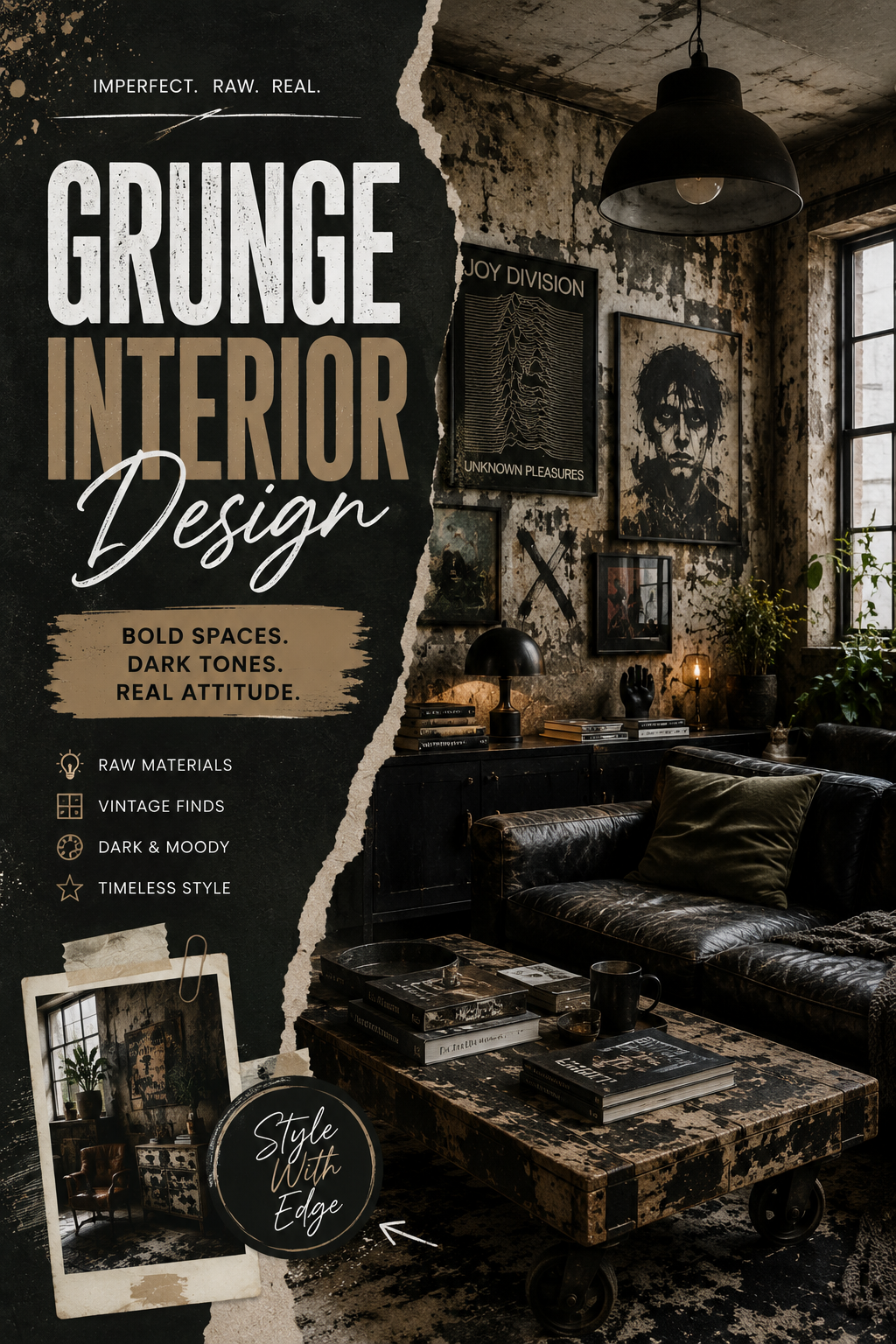
Perfect rooms are boring. Grunge interiors know that better than any other style out there.
This look takes everything polished decor tells you to avoid, distressed surfaces, mismatched vintage finds, dark moody color, and turns it into the whole point. It’s not messy. It’s intentional imperfection, and it’s one of the most personality-packed styles you can bring into a home.
If you’re tired of rooms that feel staged, this is the one that finally feels lived in. Here’s how to build it properly.
What You’ll Need
- A leather sofa (distressed or worn-in look preferred)
- A reclaimed wood or metal coffee table with visible wear
- A dark, low-hanging pendant light
- Vintage concert posters or band art in black frames
- A distressed or dark-toned area rug
- A black or dark wood media console
- Mixed vintage lamps (metal or ceramic bases)
- Textured throw pillows in olive, black, or charcoal
- Stacked vintage books and small objects
- A plant to soften the darker palette
Pro Styling Tips
1. Lean into worn, not damaged. There’s a difference between a distressed leather sofa and one that’s actually falling apart. Grunge celebrates patina, not disrepair.
2. Keep your palette dark but not flat. Black, charcoal, deep olive, and rust brown all work together. Add one warm metal accent (aged brass or black iron) to keep it from reading as one-note.
3. Mix in real vintage finds, not just distressed-look furniture. Thrifted pieces with actual history give the room authenticity that manufactured “distressed” furniture can’t fully replicate.
4. Layer your lighting low and warm. Skip bright overhead lighting entirely. Table lamps, pendant fixtures, and even a small flame candle all support the moody atmosphere this style depends on.
5. Let the walls do some of the talking. Textured, weathered wall finishes or a dense cluster of framed art give the room depth without needing extra furniture.
Tools You’ll Need (If Any DIY Is Involved)
- Drill and wall anchors (for framed art or wall-mounted lighting)
- Level
- Stud finder
- Measuring tape
- Sandpaper (for distressing wood pieces yourself)
- Dark wood stain or wax (for aging new furniture)
Substitutions and Variations
| Item | Budget Swap | Upgrade Swap | Small Space Version |
|---|---|---|---|
| Sofa | Faux leather sofa | Genuine distressed leather sofa | Single leather accent chair |
| Coffee table | Reclaimed-look laminate table | Real salvaged wood or metal table | Small vintage trunk as a table |
| Rug | Printed distressed-style rug | Authentic worn vintage rug | Smaller accent rug under seating only |
| Wall art | Thrifted framed prints | Original vintage posters and art | One dense cluster of 4 to 5 pieces instead of a full wall |
| Lighting | Simple black dome pendant | Vintage industrial fixture | Wall-mounted sconce to save ceiling clearance |
Renters: Thrifted framed art on Command strips, a plug-in pendant instead of hardwired, and a dark area rug over existing flooring bring in the full look with zero permanent changes.
Small space version: One leather accent chair, a small vintage side table, and a tight cluster of framed art bring in the aesthetic without needing a full room.
Make Ahead / Prep Tips
- Source vintage and thrifted pieces early since good distressed finds don’t sit around for long.
- If distressing furniture yourself, test your sanding or staining technique on a hidden section first.
- Plan your art cluster layout on the floor before hanging, this style benefits from a dense, slightly imperfect arrangement rather than a rigid grid.
- Order your sofa first since leather pieces especially tend to have longer lead times than fabric options.
Budget Breakdown
| Category | Budget Range |
|---|---|
| Sofa | $700–$3,200 |
| Coffee table | $150–$800 |
| Lighting | $60–$400 |
| Rug | $150–$700 |
| Decor and accessories | $100–$450 |
| Total | $1,160–$5,550 |
Thrifted and vintage finds bring this total down significantly, and in this style, secondhand pieces often look more authentic than new ones anyway.
Step-by-Step: How to Style a Grunge Room
Step 1: Choose Your Dark Palette
Pick black or charcoal as your base, then add one or two warm tones like olive or rust brown to keep the room from feeling flat.
Step 2: Bring In the Statement Seating
A worn leather sofa is the anchor piece. If a full sofa isn’t in the budget, a single distressed leather chair carries the same weight.
Step 3: Add a Weathered Coffee Table
Reclaimed wood or aged metal with visible texture grounds the space and adds that lived-in quality.
Step 4: Layer the Rug
A dark, worn-look rug adds texture underfoot and helps ground the darker furniture pieces above it.
Step 5: Build the Art Wall
Cluster framed vintage posters and art somewhat densely, slightly uneven spacing actually works in favor of this style.
Step 6: Install Low, Warm Lighting
A black pendant fixture overhead, paired with one or two table lamps, keeps the whole room moody instead of harsh.
Step 7: Style the Coffee Table and Console
Stack vintage books, add one or two small sculptural objects, keep everything slightly imperfect rather than perfectly aligned.
Step 8: Finish With Texture
Textured throw pillows, a worn throw blanket, and one plant to keep the darker palette from feeling lifeless.
Style Variations
Grunge industrial: more exposed metal and concrete, cooler tones, harder edges throughout.
Grunge bohemian: warmer tones, more plants, softer textiles mixed into the darker base palette.
Grunge minimalist: fewer decor objects, more negative space, letting texture and color carry the room instead of clutter.
Grunge maximalist: denser art walls, more collected objects, heavier pattern layering on top of the dark base.
Room Pairing Suggestions
Grunge design pairs especially well with:
- A moody home bar using the same dark, worn palette
- An industrial-style home office with matching metal and wood finishes
- An entryway styled with one weathered console and a dense cluster of art
Maintenance and Upkeep
- Condition leather furniture every few months to keep it supple without erasing its natural patina.
- Dust textured wall finishes and framed art regularly, matte and weathered surfaces show dust more visibly than smooth ones.
- Vacuum distressed or vintage rugs gently, older textiles often need more careful handling than modern synthetic ones.
- Check bulbs in warm, low lighting fixtures often, dim or inconsistent bulbs undercut the moody atmosphere this style depends on.
- Rotate small vintage finds occasionally to keep the room feeling collected rather than static.
FAQ
Is grunge interior design the same as just leaving a room messy? No. Grunge is intentional imperfection, worn textures and dark tones chosen deliberately, not actual clutter or neglect.
Do I need real vintage pieces for this to work? Real vintage adds authenticity, but distressed-look new furniture can absolutely get you most of the way there on a smaller budget.
What colors define grunge best? Black, charcoal, deep olive, and rust brown, often paired with aged brass or black iron accents.
Can grunge work in a small apartment? Yes. A single leather chair, a weathered side table, and a dense cluster of framed art bring in the full aesthetic without needing a large room.
How do I keep grunge from feeling too dark or heavy? Add warm, low lighting throughout and include at least one plant. Both keep the darker palette from tipping into gloomy.
Wrapping Up
Grunge interior design works because it embraces texture and history instead of hiding them. Worn leather, weathered wood, and a dark palette that feels moody instead of flat.
Start with your seating, layer in the weathered textures, and let the lighting carry the mood.
If you bring this style into your own space, drop a comment and tell me what vintage find became the centerpiece of your room.