You’ve picked up the same 47 Lego pieces three times this week. You’ve stepped on a Barbie shoe at 6am. You’ve opened the closet and had a stuffed animal avalanche land on your foot.
Here’s the truth nobody tells you: it’s not a mess problem, it’s a storage problem.
Kids don’t need less stuff (okay, sometimes they do). What they really need is a room where every single item has one home. One spot. No guessing.
Once that clicks into place, cleanup stops being a fight. Your kid can actually do it themselves. And you get your evenings back.
This is your full plan for turning that chaos into a room that stays calm, even after a full day of play.
What You’ll Need
- Clear stackable storage bins (small, medium, and large)
- Labeled fabric baskets (soft-sided, for toy shelves)
- Over-the-door shoe organizer (for small toys, art supplies, or hair accessories)
- Under-bed storage boxes with wheels
- Floating wall shelves (2 to 3, depending on room size)
- Closet organizer system (double hang rod or cubby insert)
- Toy bench or storage ottoman with a lid
- Wall hooks (for jackets, bags, and costumes)
- Wall-mounted book ledge or small bookshelf
- Chalkboard labels or a label maker
- Command strips (for a no-drill option)
- Small rolling cart for art supplies
- Laundry hamper with a lid
You don’t need all of this on day one. Grab what fits your kid’s biggest clutter zone first, then build from there.
Tools You’ll Need (If You’re Mounting Anything)
- Drill
- Stud finder
- Level
- Screwdriver
- Measuring tape
- Pencil
Skipping the drill? Command strips and freestanding shelving units handle most of this without a single hole in the wall.
Step-by-Step: How to Declutter a Kid’s Room That Actually Stays Organized
Step 1: Pull Everything Out
Sounds intense. It works. Empty every bin, shelf, and closet corner onto the floor or bed.
You can’t organize what you can’t see. And half the stuff hiding under the bed probably shouldn’t come back out anyway.
Step 2: Sort Into Four Piles
- Keep and use often
- Keep but store away (seasonal, sentimental, outgrown-but-not-yet)
- Donate
- Toss
Let your kid help with this if they’re old enough. They’ll fight less about giving things up if they feel like they made the call.
Step 3: Group by Category, Not by Toy Box
Skip the giant catch-all toy bin. It’s where organization goes to die.
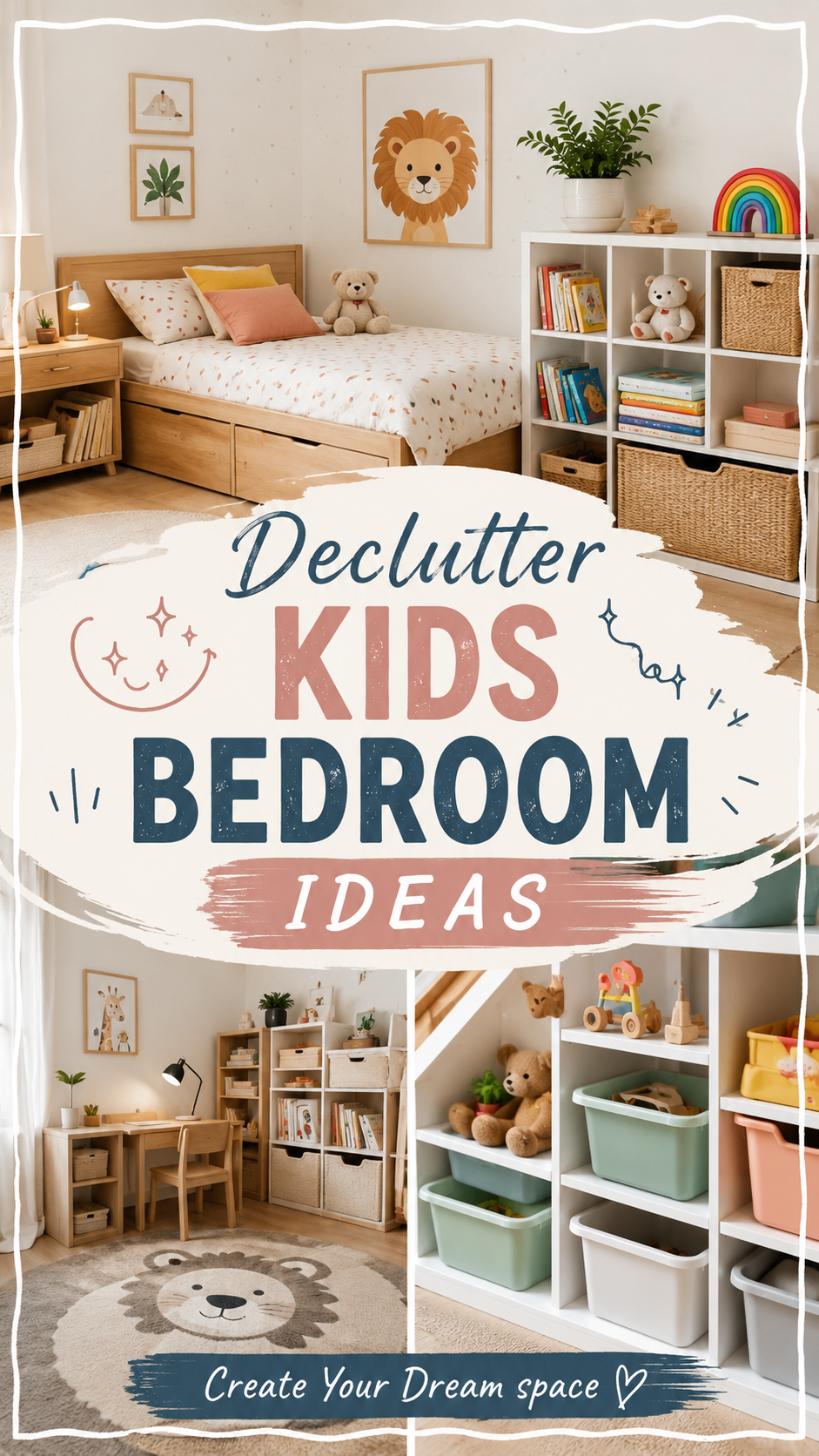
Instead, group everything by type: all the building blocks together, all the art supplies together, all the dress-up stuff together. Each category gets its own bin or basket.
Step 4: Assign a Home to Every Category
This is the part people skip, and it’s the part that actually matters.
Every single bin gets a spot. Every spot gets a label. If your five-year-old can’t read yet, use pictures instead of words.
Step 5: Put Frequently Used Items Within Reach
Toys they play with daily go on low, open shelves. Toys they touch once a month go up high or in a closet bin.
Kids can’t put away what they can’t reach.
Step 6: Create a Landing Zone by the Door
One hook for the backpack. One basket for shoes. One spot for the jacket.
This single move stops so many random piles before they start.
Step 7: Do a Weekly 10-Minute Reset
Every Sunday, walk the room and put anything that’s drifted back to its home. Ten minutes, tops.
This is the step that makes the whole system last.
Pro Styling Tips
Use clear bins whenever possible. Kids can see what’s inside without dumping everything out to look.
Label with pictures, not just words. Even readers respond faster to an image than text when they’re rushing to clean up before dinner.
Keep one bin totally empty. Call it the “everything else” bin. It catches random odds and ends so they’re not scattered on the floor.
Rotate toys seasonally. Store half the toy collection away and swap it in a few months later. It’ll feel brand new to your kid, and you’ll cut visible clutter in half.
Get the bed working harder. Under-bed storage with wheels is one of the most underused spaces in a kid’s room.
Substitutions and Variations
| Situation | Swap This For That |
|---|---|
| Small bedroom | Skip the toy chest, go with wall shelves and under-bed bins instead |
| Tight budget | Use shoeboxes and dollar-store bins instead of matching storage sets |
| No drill allowed (renters) | Command strip hooks and freestanding shelving units |
| Toddler room | Lower everything, use soft bins with no sharp edges |
| Shared sibling room | Color-code each kid’s bins so nothing gets mixed up |
| Teen bedroom | Trade toy bins for closet systems, desk organizers, and floating shelves |
Make Ahead / Prep Tips
Measure your shelf and closet space before you buy a single bin. Nothing wastes a Saturday faster than storage that doesn’t fit.
Order labels or a label maker in advance so they’re ready the day you sort. Doing this step later means clutter creeps back in before you finish labeling.
If you’re donating items, bag them up and get them out of the house within 48 hours. Otherwise, that donate pile just becomes new clutter in the garage.
Budget Breakdown
- Low budget ($30–$60): Dollar store bins, cardboard label tags, command hooks
- Mid budget ($75–$150): Fabric storage baskets, one closet organizer kit, a rolling art cart
- Higher budget ($200+): Matching bin systems, built-in style shelving, a storage bench with cushion
You genuinely don’t need to spend big here. The system matters far more than the price tag.
Style Variations
- Boho: Woven baskets, natural wood shelves, macrame wall hooks
- Minimalist: All-white bins, hidden storage, closed cabinets over open shelving
- Playful/colorful: Mixed bright bins, chalkboard labels, patterned baskets
- Farmhouse: Wire baskets, wood crate storage, painted labels
Maintenance and Upkeep
Stick to the weekly reset. It’s the single habit that keeps this whole system from collapsing.
Every few months, do a quick outgrown-toy sweep. Kids’ interests shift fast, and last season’s favorite is this season’s clutter.
Check labels every so often, especially if your kid is learning to read. Update pictures to words as they grow.
FAQ
How often should I declutter my kid’s room? A light pass every season works well, with one deeper sort each year.
My kid refuses to get rid of anything. What do I do? Try a “maybe box.” Anything they’re unsure about goes in, sealed, and dated. If they haven’t asked for it in three months, it’s safe to donate.
What’s the single best storage item for a kid’s room? Under-bed storage. It’s the most overlooked space and usually the easiest win.
How do I stop toys from ending up back in one giant pile? Category-based bins with clear labels. A single catch-all bin is almost always the root cause of the pile.
Should I involve my kid in the decluttering process? Yes, especially with the sorting decisions. Kids stick with systems they helped build.
Wrapping Up
A calm kid’s room isn’t about having less stuff or spending more money. It’s about giving everything a home your kid can actually remember and reach.
Start with one shelf or one bin this weekend. Momentum builds fast once the first system clicks into place.
Have you tried any of these ideas in your own home? Drop a comment and let me know what’s working (or what’s still driving you a little crazy).