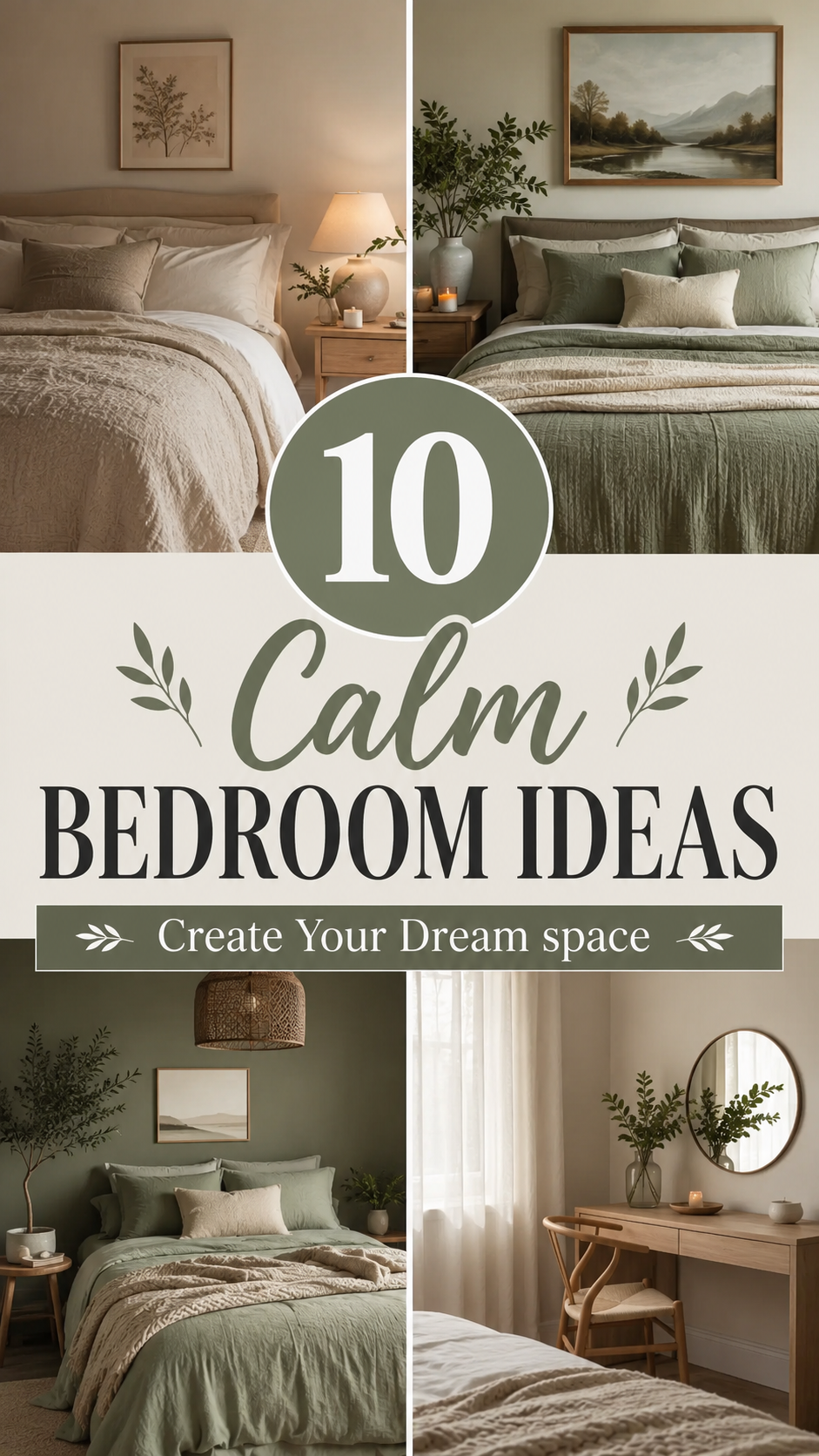
Your bedroom is lying to you.
It says “rest here.” But then it’s cluttered with laundry, lit like an operating room, and painted the color of a highlighter. No wonder you’re scrolling at midnight instead of sleeping.
A calm bedroom isn’t about spending a fortune or gutting the whole room. It’s about a handful of smart, deliberate choices that tell your nervous system: you’re safe, you can slow down now.
Here are 10 ways to get there. Pick three. Pick all ten. Just start.
What You’ll Need
- Soft, neutral or muted bedding (linen, cotton, or a cotton-linen blend)
- A low-wattage table lamp or two (warm white bulbs, 2700K or lower)
- Blackout curtains or a bedside blind
- A wool or jute area rug
- 1-2 woven baskets for visible storage
- A small tray for your nightstand
- Dried or preserved florals (pampas grass, eucalyptus)
- A weighted or textured throw blanket
- Unscented or lightly scented candle (or a diffuser)
- Optional: a piece of soft-toned wall art or a mirror
Pro Styling Tips
1. Pick one calming color and build around it. Sage, warm greige, soft clay, or dusty blue all work. Fighting between three “calm” colors just creates visual noise.
2. Layer your lighting instead of relying on one overhead light. A single ceiling fixture on full blast reads as “interrogation room,” not “sanctuary.”
3. Keep surfaces at 70% empty. Every nightstand, dresser, and shelf should have breathing room. Clutter equals cortisol, even if you don’t consciously notice it.
4. Texture does the heavy lifting color usually gets credit for. A room in all one shade of white still feels rich if you mix linen, wood, wool, and something matte ceramic.
5. Your bed should be the most “finished” thing in the room. If nothing else gets styled, style the bed. It’s 60% of what you see when you walk in.
Tools You’ll Need (If You’re DIYing Any of This)
- Measuring tape
- Hammer and picture hooks (for wall art or mirrors)
- Level
- Curtain rod hardware (if installing new rods)
- Screwdriver
Nothing here requires a power drill unless you’re hanging heavier shelving. Most of this is arrange-and-style, not build-from-scratch.
Step-by-Step: How to Calm Down Your Bedroom
1. Start with the bed, not the walls
Swap in soft, breathable bedding in a muted tone. Add one textured throw folded at the foot of the bed. Two pillows in a contrasting texture, not color, add depth without visual noise.
2. Control the light
Blackout curtains aren’t optional if you’re serious about sleep. Add a lamp with a warm bulb for evening hours. Skip the overhead light after 8 PM entirely if you can.
3. Clear the surfaces
Take everything off your nightstand and dresser. Put back only what you actually use: a lamp, a small tray, maybe one book. Everything else goes in a drawer or basket.
4. Add one grounding texture element
A jute or wool rug near the bed instantly warms up a room and muffles sound. Bare feet on something soft in the morning is an underrated mood booster.
5. Bring in something living or once-living
A plant, dried florals, or even a single branch in a vase softens hard lines and adds a sense of calm most people can’t quite explain but definitely feel.
6. Style the walls last, and sparingly
One piece of art or a mirror is plenty. Skip gallery walls in a bedroom, they read as busy, not curated, in a small space meant for rest.
Substitutions and Variations
| If you have… | Try this instead |
|---|---|
| A small bedroom | Skip the rug, use a runner beside the bed instead |
| A tight budget | Thrift the vase, tray, and baskets; save spend for bedding |
| No sewing skills | Buy pre-made linen duvet covers, no hemming needed |
| Renters, no painting allowed | Use a large fabric wall hanging instead of paint |
| Kids or pets in the house | Choose washable cotton over delicate linen |
Style variations:
- Boho calm: add rattan, a macrame wall hanging, warmer terracotta tones
- Minimalist calm: stick to two colors max, no patterns, matte finishes only
- Farmhouse calm: whitewashed wood, ticking stripe pillow, vintage brass lamp
- Coastal calm: driftwood tones, linen in soft blue-grey, woven textures
Make Ahead / Prep Tips
- Measure before you buy. Rugs and curtains are the two items most commonly returned because of sizing mistakes.
- Order blackout curtains early. Custom sizes can take 2-3 weeks to arrive.
- Wash new linen bedding before first use. It softens with every wash, and pre-washing avoids that stiff, straight-off-the-shelf feel on night one.
- Test lamp bulbs before committing. Bring one home and turn it on at night before buying three more.
Budget Breakdown (Approximate)
| Item | Budget Option | Mid-Range Option |
|---|---|---|
| Bedding set | $40-60 | $120-180 |
| Blackout curtains | $30-50 | $80-150 |
| Area rug | $60-100 | $200-400 |
| Lamp | $20-35 | $60-120 |
| Decor accents (florals, tray, baskets) | $30-50 | $80-120 |
A full refresh can run anywhere from $180 on the low end to $800+ if you’re going mid-range across the board. You don’t need to hit every category at once.
Maintenance and Upkeep
- Wash linens every 1-2 weeks to keep them feeling fresh, not just looking it
- Fluff and rotate throw pillows weekly so they don’t flatten on one side
- Dust surfaces before they visibly need it, dust buildup dulls a calm palette fast
- Swap dried florals every few months, they collect dust and lose their shape over time
- Vacuum or shake out rugs weekly if you’re in a high-traffic household
FAQ
Do I need to repaint my walls for a calm bedroom? No. Bedding, lighting, and textiles do most of the emotional work. Paint helps, but it’s the last lever to pull, not the first.
What’s the single highest-impact change I can make? Lighting. Swapping one harsh overhead bulb for warm, layered lamp light changes how a room feels almost instantly.
Is a rug really necessary in a small bedroom? Not necessary, but it adds warmth and sound absorption. If space is tight, a runner along one side of the bed gives you the benefit without eating the room.
How do I keep the room calm if I share it with a partner or kid? Stick to one shared color story and give each person one small “own” element, like a reading lamp or personal shelf. Shared calm doesn’t mean identical taste.
Can a calm bedroom actually improve sleep, or is that just aesthetics? Lower light exposure, reduced visual clutter, and cooler color tones are all linked to easier wind-down and better sleep onset. This isn’t just styling talk, it’s backed by how our brains respond to environment.
Wrapping Up
A calm bedroom isn’t a finished project. It’s a handful of small, ongoing choices that add up to a room your body actually wants to rest in.
Start with the bed. Fix the lighting. Clear one surface. That’s it, that’s enough to feel a shift tonight.
What’s the first thing you’re changing? Drop it in the comments, I read every one.