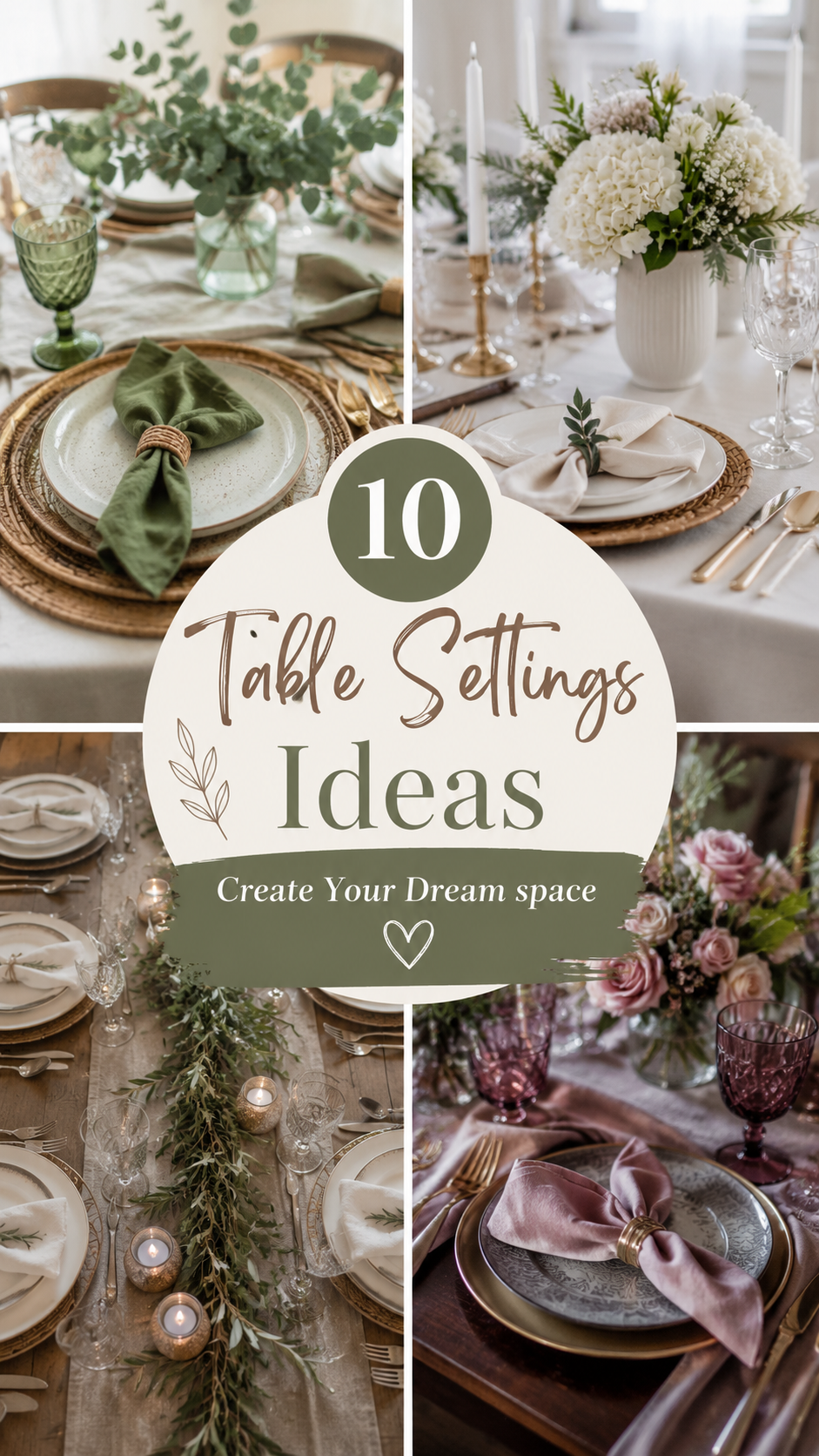
Your table is doing more talking than you think.
Before anyone tastes a bite of food, they’ve already noticed the plates, the napkins, the way the light hits the glassware. That’s your table setting working overtime, and most of us are leaving it at “fine” when it could be doing so much more.
You don’t need a china cabinet full of heirlooms or a florist on speed dial. You need a few smart pieces, a little bit of layering, and a plan.
Let’s build one you’ll actually want to use on a random Tuesday.
What You’ll Need
Here’s your shopping list. Mix and match based on your style.
| Category | Items |
|---|---|
| Base layer | Tablecloth or table runner, placemats |
| Dinnerware | Dinner plates, salad or appetizer plates, bowls |
| Glassware | Water glasses, wine glasses |
| Flatware | Forks, knives, spoons |
| Linens | Cloth napkins, napkin rings |
| Centerpiece | Candles or candle holders, a low vase, greenery or flowers |
| Finishing touches | Place cards, small trays or coasters, table numbers (for bigger gatherings) |
You already own most of this. The trick is arranging it with intention instead of just plopping it down.
Pro Styling Tips
Layer your plates. A charger under a dinner plate under a salad plate adds height and makes even a weeknight dinner look composed. It also gives guests a visual cue for what course is coming.
Mix metals on purpose. Gold flatware with silver candle holders isn’t a mistake if you commit to it. Two metal tones read as styled. Four reads as clutter.
Keep the centerpiece low. Anything taller than 12 inches blocks eye contact across the table. Guests want to see each other, not a jungle of stems.
Fold napkins with a job to do. A napkin tucked into a glass or wrapped with a sprig of rosemary does more visual work than a flat square ever will.
Light more candles than feels necessary. Three small tapers look sparse. Five to seven at varying heights look like a magazine spread.
Tools You Might Need
Most table settings need zero tools. If you’re adding DIY elements like place cards or a folded napkin ring, keep these nearby:
- Scissors
- Hot glue gun (for DIY napkin rings or place card holders)
- Ribbon or twine
- Iron (for crisp linens)
Step-by-Step: Setting the Table
1. Start with the base
Lay your tablecloth or runner first. If you’re using a runner, center it and let it hang evenly on both ends.
2. Add placemats (optional)
Skip this if you’re using a full tablecloth. Use it if your table is bare wood and you want texture underneath the plates.
3. Set the plates
Charger first, dinner plate on top, salad plate on top of that if you’re using one. Center each stack on the placemat or directly in front of each chair.
4. Place the flatware
Forks go to the left. Knife and spoon go to the right, blade facing the plate. Work from the outside in based on course order.
5. Add the glassware
Water glass sits above the knife. Wine glass sits just to the right and slightly forward of the water glass.
6. Fold and place the napkin
Set it on the plate, tucked under the fork, or standing in the glass depending on the look you’re going for.
7. Build your centerpiece
Cluster candles and greenery down the center of the table. Stagger the heights so it feels natural, not lined up like soldiers.
8. Do a walk-around check
Sit in each seat for a second. Make sure nothing blocks sightlines and every place setting mirrors the next.
Substitutions and Variations
No cloth napkins? Use a linen tea towel folded in thirds. It reads as intentional, not improvised.
Small space or small table? Skip the charger plates entirely. They eat up surface area fast. A runner and a single low centerpiece will do more with less.
Big gathering, tight budget? Buy one set of good white dinner plates and let your napkins, candles, and greenery carry the color and personality. White plates work with every style you’ll ever try.
Want a different aesthetic?
- Boho: Rattan chargers, mismatched vintage glasses, dried pampas grass
- Farmhouse: Wood chargers, stoneware plates, mason jar glasses
- Minimalist: All white or all black dinnerware, single stem bud vases, no patterns
- Coastal: Blue and white striped napkins, shell place card holders, driftwood centerpiece
Make Ahead / Prep Tips
Iron your linens the night before. Wrinkled napkins are the fastest way to make a styled table look thrown together.
Order flowers or greenery two to three days ahead so they have time to open up and settle before guests arrive.
Do a full trial run for big dinners, weddings, or holidays. Set one full place setting a week early so you can spot problems while there’s still time to fix them.
Polish silver flatware ahead of time. Tarnish shows up more under candlelight than you’d expect.
Budget Breakdown
| Setup Level | Approximate Cost per Setting | What’s Included |
|---|---|---|
| Basic | $8 to $15 | Plate, glass, flatware, paper napkin |
| Mid-range | $20 to $35 | Charger, plate, glassware, cloth napkin, napkin ring |
| Elevated | $40+ | Full layered plates, crystal glassware, linen napkin, place card |
You don’t need to hit the top tier every time. Save it for the dinners that call for it.
Maintenance and Upkeep
Hand wash crystal and gold-rimmed flatware. Dishwashers are rough on both.
Store cloth napkins folded flat, not balled up, so you’re not reaching for an iron every single time.
Wipe down candle holders with warm water right after the wax cools. It peels off in one piece instead of hardening into a scraping project.
Rotate your centerpiece greenery every few days if you’re using fresh stems for a multi-day event. Wilted greenery undoes everything else on the table.
FAQ
Do I really need a charger plate? No. It adds height and polish, but a well-set table works without one. Skip it for everyday meals and save it for gatherings.
What’s the correct order for flatware? Outside in, based on course order. The fork or spoon you’ll use first sits on the outside.
How many candles is too many? If you can’t see the person across from you through the flicker, pull a few back. Otherwise, more is usually better than fewer.
Can I mix patterns on plates? Yes, as long as one element ties them together, like a shared color or a matching rim width.
What if I don’t own matching chairs? Lean into it. Add a coordinating cushion or throw to each chair instead, and let the table setting be the unifying element.
Wrapping Up
A great table setting isn’t about owning more stuff. It’s about arranging what you have with a little more care than usual.
Start with one idea from this list. Maybe it’s the low centerpiece, maybe it’s the layered plates. Build from there next time.
Try one of these looks for your next dinner and tell me which one you went with. I’d love to hear how it turned out.