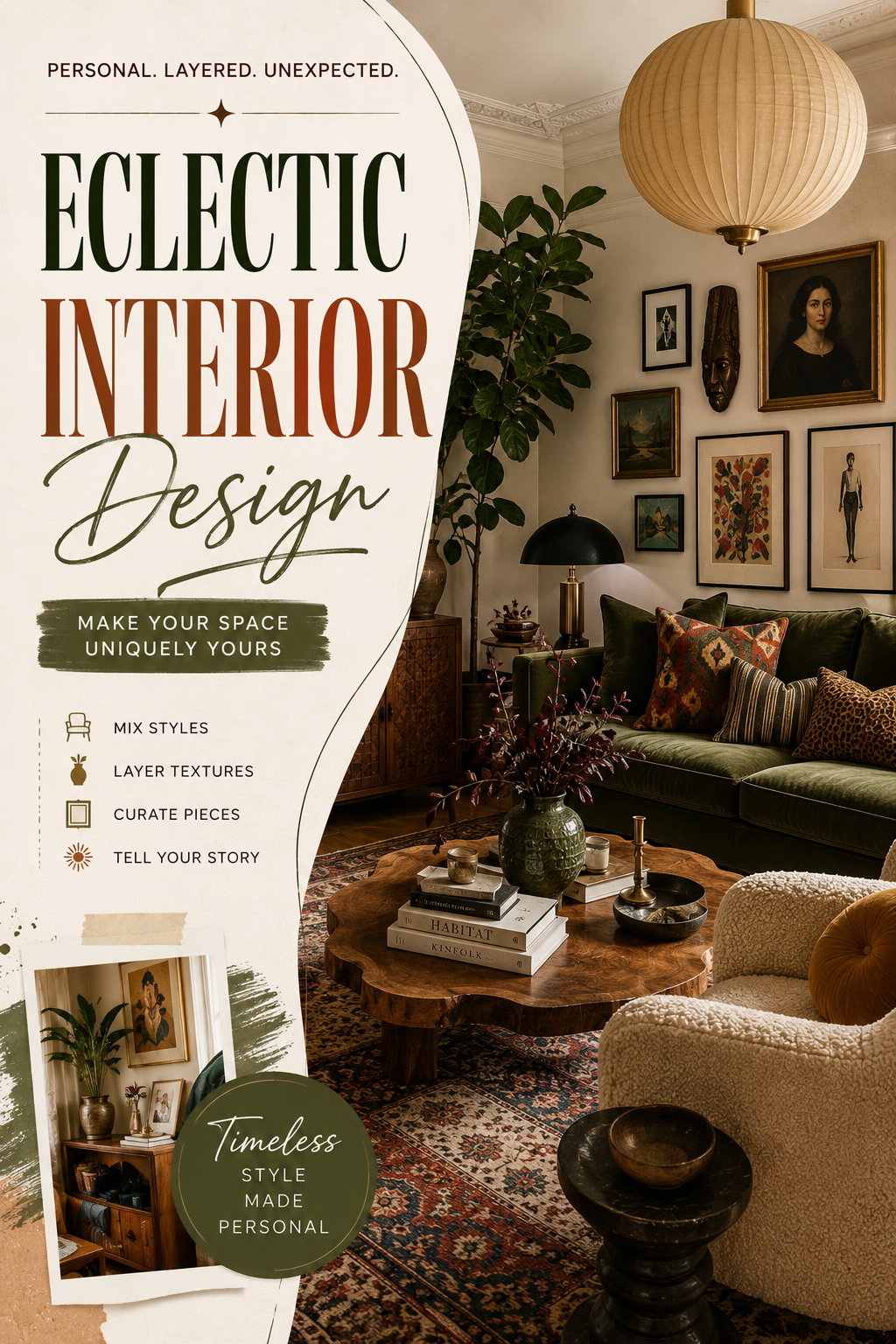
A room that matches perfectly is easy to forget. A room that tells a story is the one people remember.
Eclectic design gets a bad reputation because people think it means throwing random things together and hoping for the best. It doesn’t. The best eclectic spaces are actually more curated than most “matchy” rooms, they just follow a different set of rules.
If you’ve got pieces from different eras, different trips, different phases of your life, this is the style that finally lets them live in the same room without fighting each other. Here’s how to do it right.
What You’ll Need
- A statement sofa in a rich solid color (velvet works especially well)
- A live-edge or vintage wood coffee table
- A vintage or antique area rug with pattern
- A gallery wall mixing frame styles and art types
- Mixed-pattern throw pillows (at least two to three different patterns)
- A collection of ceramic or brass vessels
- A dramatic pendant or oversized lamp
- A vintage cabinet or console for storage
- A tall plant for organic contrast
- Books, both stacked and displayed
Pro Styling Tips
1. Pick one or two colors that repeat throughout the room. Eclectic doesn’t mean chaotic. A green sofa, a green plant, and a green ceramic vase tie everything together even when the patterns and eras vary wildly.
2. Mix time periods on purpose. A vintage rug under a modern sofa, an antique portrait next to a contemporary print. The contrast between old and new is what gives eclectic rooms their depth.
3. Vary your frame styles on the gallery wall, but keep the spacing consistent. Different frames, mats, and even art styles work together as long as the gaps between them stay even.
4. Layer patterns by scale, not just color. Pair a large-scale pattern with a small, tight one. Two patterns of the same scale tend to compete instead of complementing each other.
5. Let your collections be the decor. Books, ceramics, art, travel finds. Eclectic rooms don’t need generic decor items when your own collected pieces can do the work.
Tools You’ll Need (If Any DIY Is Involved)
- Drill and wall anchors (for the gallery wall)
- Level
- Stud finder
- Measuring tape
- Picture hanging kit
- Paper templates for planning gallery wall layout before drilling
Substitutions and Variations
| Item | Budget Swap | Upgrade Swap | Small Space Version |
|---|---|---|---|
| Sofa | Solid-color sofa from a big box store | Vintage or reupholstered velvet sofa | Single statement accent chair |
| Coffee table | Wood-look laminate table | Genuine live-edge wood table | Small vintage side table |
| Rug | Printed vintage-style rug | Authentic antique or hand-knotted rug | Smaller accent rug under just the seating |
| Gallery wall | Thrifted frames, mixed and matched | Original art and antique frames | One curated cluster of 3 to 4 pieces instead of a full wall |
| Lighting | Paper lantern pendant | Vintage brass or ceramic lamp | Wall-mounted sconce to save table space |
Renters: Command strips for the gallery wall, a plug-in pendant instead of hardwired, and a large area rug over existing flooring get you most of the look with zero permanent changes.
Small space version: One statement chair, a small vintage side table, and a tightly curated four-piece gallery cluster brings in the full aesthetic without needing a full living room.
Make Ahead / Prep Tips
- Pull your collected pieces first, art, books, ceramics, before buying anything new. Eclectic design starts with what you already have.
- Lay out your gallery wall on the floor before hanging anything, then trace it with paper templates on the actual wall.
- Source vintage or secondhand pieces early since inventory turns over fast and good finds don’t wait around.
- Decide your one or two repeating colors before shopping so new purchases actually tie into the room instead of adding more noise.
Budget Breakdown
| Category | Budget Range |
|---|---|
| Sofa | $600–$3,000 |
| Coffee table | $150–$900 |
| Rug | $200–$1,200 |
| Gallery wall and art | $100–$800 |
| Decor and accessories | $100–$500 |
| Total | $1,150–$6,400 |
Thrifted and vintage finds can bring this total down significantly since eclectic style is one of the few looks where secondhand pieces are often more valuable than new ones.
Step-by-Step: How to Style an Eclectic Room
Step 1: Audit What You Already Own
Pull together every piece of art, every vase, every textile you already have. This becomes your starting palette.
Step 2: Choose Your Anchor Color
Pick one or two colors that show up across your existing pieces, then commit to repeating them in any new purchases.
Step 3: Bring In the Statement Seating
A rich, solid-colored sofa gives the busier elements around it something calm to rest against.
Step 4: Layer the Rug
A patterned vintage or antique rug adds texture and grounds the more eclectic pieces layered on top of it.
Step 5: Build the Gallery Wall
Lay out frames on the floor first. Mix eras and styles, but keep spacing between pieces consistent throughout.
Step 6: Style the Coffee Table
Stack books, group ceramics in odd numbers, add one fresh floral element. Let height and texture vary.
Step 7: Add Pattern Through Pillows and Textiles
Two to three different patterns max, varied in scale, tied together by your anchor color.
Step 8: Finish With Collected Objects
Travel finds, brass pieces, ceramics. These are what make the room feel like yours instead of a showroom.
Style Variations
Eclectic bohemian: more plants, warmer tones, heavier pattern layering.
Eclectic vintage: leans harder into antique furniture and aged patina over new pieces.
Eclectic modern: cleaner lines mixed with just a few standout vintage or collected pieces.
Eclectic maximalist: bolder colors, more pattern, denser gallery walls, less negative space overall.
Room Pairing Suggestions
Eclectic design pairs especially well with:
- A layered, pattern-rich dining room using a similar anchor color
- A reading nook styled with a mix of vintage and new furniture
- An entryway gallery wall that previews the mixed styles found throughout the home
Maintenance and Upkeep
- Rotate smaller decor pieces seasonally to keep the room feeling curated rather than static.
- Dust gallery wall frames regularly, mixed materials like wood, metal, and glass all collect dust differently.
- Vacuum vintage or antique rugs gently, older textiles are often more delicate than modern synthetic rugs.
- Refresh greenery and floral elements often, wilted plants stand out more in a layered, detail-heavy room.
- Reassess your collected objects every so often. Eclectic rooms benefit from evolving as your own collection grows.
FAQ
How do I keep eclectic from looking messy? Repeat one or two colors throughout the room, keep your gallery wall spacing consistent, and vary pattern scale rather than piling on similar-sized patterns.
Do I need real antiques for this style to work? No. Thrifted and vintage-inspired pieces work just as well. What matters more is the mix of eras and styles, not the authenticity of each individual piece.
How many patterns is too many in one room? Generally three is the ceiling for a single seating area. Beyond that, the eye has trouble resting anywhere.
Can eclectic design work in a small space? Yes, and often works especially well since a smaller room gives you a tighter, more curated collection of pieces to focus on.
What’s the easiest way to start building an eclectic room? Start with your gallery wall using pieces you already own. It sets the tone for every other design decision that follows.
Wrapping Up
Eclectic design works because it’s built on contrast and story, not matching sets. Old next to new, bold next to quiet, collected next to curated.
Start with what you already own, pick your anchor color, and let the mix build from there.
If you’ve styled an eclectic room, drop a comment and tell me what piece tells the biggest story in your space.