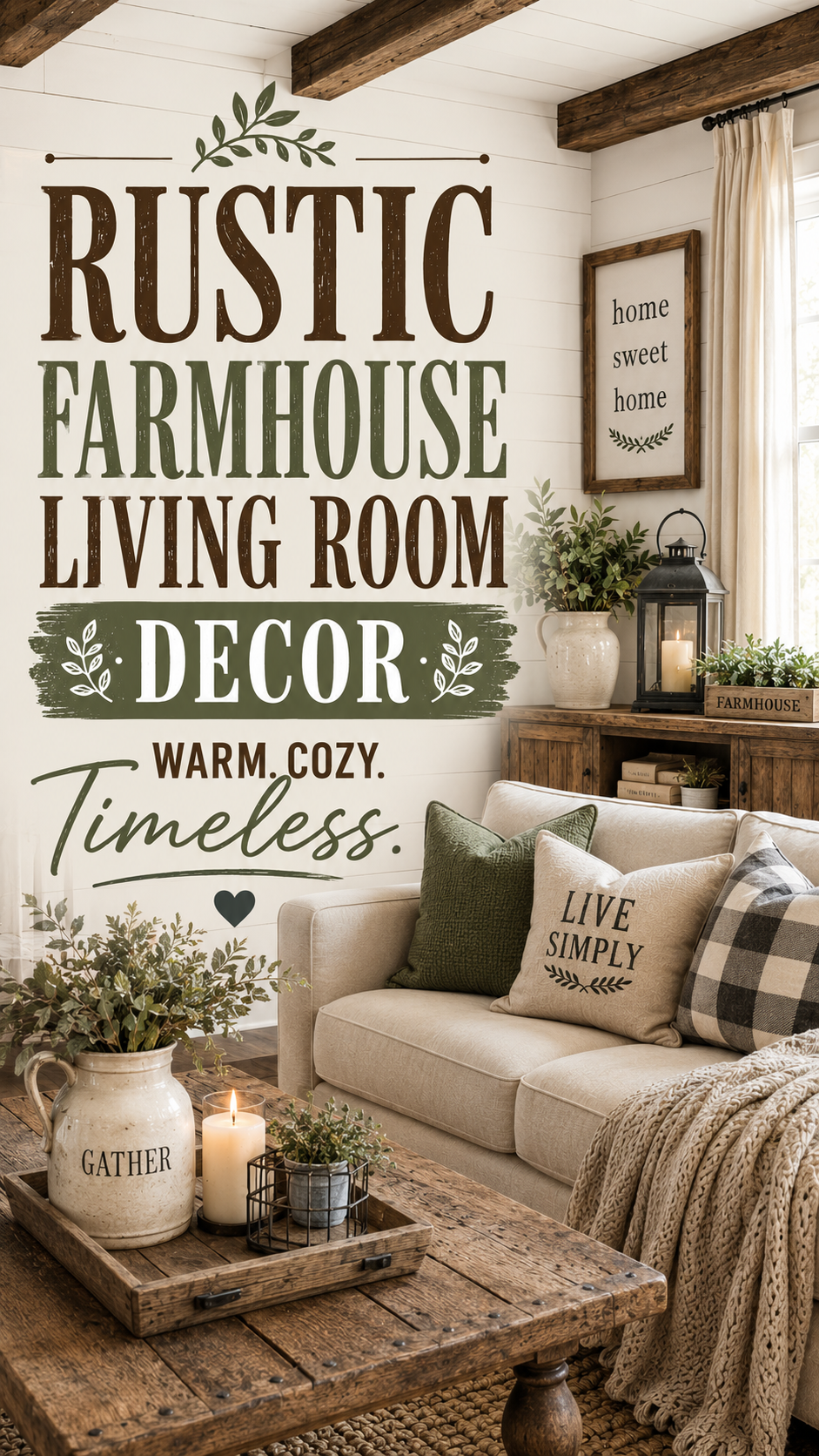
What makes a farmhouse living room feel like home instead of a furniture showroom?
It’s not the shiplap. It’s not even the “Live Laugh Love” sign your aunt swears by. It’s the mix of worn wood, soft textiles, and a few pieces that look like they actually have a story.
Rustic farmhouse decor gets a bad reputation for feeling overdone, and honestly, sometimes it is. Too many mason jars and barn doors and it stops feeling cozy and starts feeling like a theme park. But when you get the balance right, it’s one of the warmest, most welcoming styles out there.
Here’s how to get there without tipping into farmhouse cliché. 🌾
What You’ll Need
- Sofa in a neutral fabric (linen, canvas, or slipcovered cotton)
- Wood coffee table with visible grain or a distressed finish
- 1 leather or wood accent chair
- Chunky knit or wool throw blankets
- Buffalo check, ticking stripe, or solid neutral throw pillows
- A large jute or wool area rug
- Reclaimed wood or wrought iron shelving
- Wood or galvanized metal accents (trays, lanterns, buckets)
- Woven baskets for storage and blankets
- Vintage-style mirror or window pane wall art
- A few pieces of greenery, like eucalyptus, olive branches, or a fiddle leaf fig
- Wood-framed art or black and white family photos
- Table lamp with a linen or burlap shade
Tools You Might Need
- Measuring tape
- Level
- Stud finder
- Hammer or drill
- Wood filler and sandpaper (if distressing furniture yourself)
- Wall anchors or heavy-duty hooks (for shelving)
Pro Styling Tips
1. Mix your woods on purpose. You don’t need every wood tone to match. Pair a lighter oak table with a darker walnut shelf for contrast that feels collected over time.
2. One check or plaid pattern is plenty. Buffalo check works great as an accent, but covering every pillow and throw in it turns cozy into costume.
3. Bring in metal for contrast. Black iron light fixtures, galvanized trays, or wrought iron accents keep an all-wood room from feeling too heavy.
4. Vintage and new can sit side by side. A flea market find next to a brand-new sofa looks more collected than an entire room of matching new furniture.
5. Keep your palette to three colors max. Cream, wood tone, and one accent color like sage green or rust keeps the room cohesive instead of cluttered.
Substitutions and Variations
| Element | Budget Swap | Small Space Version | Large Space Version |
|---|---|---|---|
| Coffee table | Thrifted table sanded and restained | Trunk or vintage crate as a table | Large wood table with iron legs |
| Shelving | Floating shelves with wood brackets | One small shelf above a console | Full reclaimed wood shelving unit |
| Rug | Flat-weave jute instead of wool | Smaller rug under the coffee table only | Oversized rug beneath all furniture |
| Lighting | Swap in a linen lampshade on an existing lamp | Wall sconces to save table space | Wood and iron chandelier or pendant |
| Accent chair | Reupholstered thrift store chair | Skip the chair, add a bench instead | Leather wingback or barrel chair |
Style variations to try:
- Modern farmhouse: Cleaner lines, less pattern, more black metal accents.
- Cottagecore farmhouse: Add florals, lace textures, and softer pastel accents.
- Industrial farmhouse: Lean into raw wood, black iron, and exposed brick or brick-look wallpaper.
Make Ahead / Prep Tips
- Measure your space and sketch where each large piece will go.
- If distressing or restaining furniture, do this outside or in a ventilated space at least a day in advance.
- Source vintage pieces early. Good farmhouse finds take time to track down at thrift stores or flea markets.
- Wash and iron any linen curtains or slipcovers before hanging or placing them.
- Order large furniture first since custom or slipcovered pieces often have longer lead times.
Step-by-Step: How to Get the Look
Step 1: Start with Your Wood Tone
Choose one main wood tone for your largest pieces, like the coffee table and shelving, and build around it.
Step 2: Place the Sofa
Anchor the room with a neutral, slipcovered or linen sofa. This keeps the wood and metal accents from feeling too busy.
Step 3: Add the Rug
Lay a jute or wool rug large enough that your furniture’s front legs sit on top of it.
Step 4: Bring in the Coffee Table
Center it in front of the sofa with 14 to 18 inches of clearance for walking room.
Step 5: Layer Textiles
Add a chunky knit throw over the sofa arm and two to three pillows mixing solid linen with one patterned option.
Step 6: Style Your Shelving
Group items in threes: a stack of books, a small plant, and a woven basket or vintage jar.
Step 7: Add Metal and Vintage Accents
Bring in a black iron lantern, a galvanized tray on the coffee table, or a vintage mirror on the wall.
Step 8: Finish with Lighting and Greenery
Add a table lamp with a linen shade and a plant or fresh greenery to soften all the wood and metal.
Maintenance and Upkeep
- Dust wood furniture weekly with a dry cloth to protect the finish.
- Vacuum jute and wool rugs regularly, since jute can fray if left dirty too long.
- Condition leather furniture every few months to prevent cracking.
- Wash linen slipcovers and pillow covers monthly.
- Wipe down metal accents occasionally to prevent tarnishing or rust, especially in humid climates.
FAQ
How do I avoid the farmhouse style looking dated? Keep patterns to one accent, mix in modern lighting, and avoid overdoing signature farmhouse phrases in your decor.
Is shiplap required for farmhouse style? No. Wood tones, metal accents, and textiles can create the look without any wall treatment at all.
Can farmhouse decor work in a small apartment? Yes. Stick to lighter wood tones, one statement piece instead of several, and keep the color palette simple.
What colors work best with rustic farmhouse decor? Cream, warm wood tones, black or bronze metal, and one accent color like sage green, rust, or navy.
How do I make new furniture look more rustic? Add distressed wood accents nearby, mix in vintage-style hardware, and choose pieces with visible wood grain or texture.
Wrapping Up
Rustic farmhouse decor works best when it feels collected, not curated overnight. Mix your wood tones, keep your patterns simple, and let a few vintage pieces do the talking.
Start with one corner of your room and build from there. It doesn’t have to happen all at once.
Have you tried farmhouse style in your own living room? Share what worked, or what you’re still figuring out, in the comments.