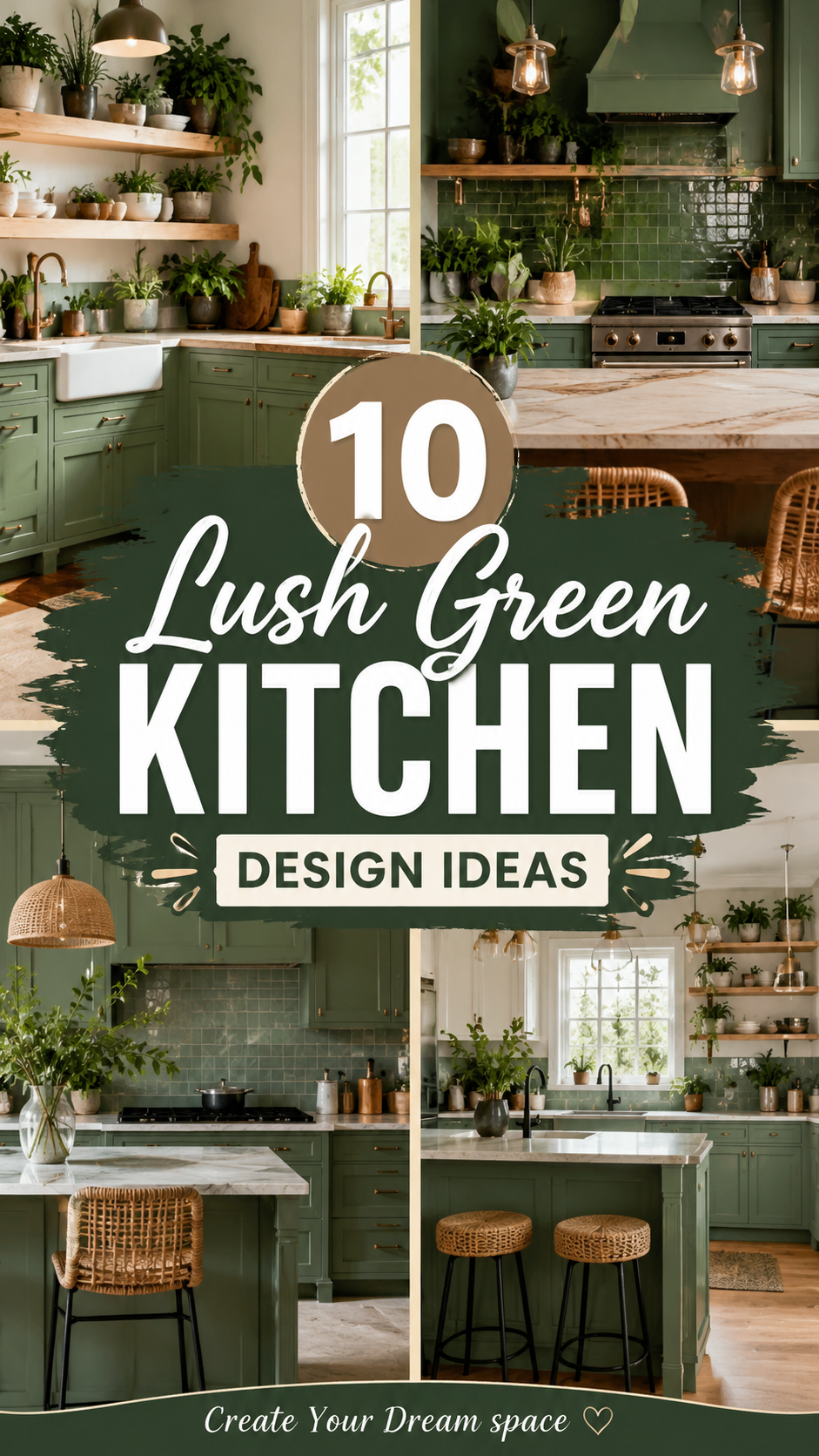
Why does every kitchen makeover start with white cabinets and end with regret?
Green is quietly taking over kitchens right now, and once you see why, you won’t unsee it. It’s warm without trying too hard. It plays well with wood, brass, marble, even chrome. And it photographs like a dream.
If your kitchen feels flat, tired, or just “fine,” this is your sign to change that. Below are 10 ways to bring lush green into your kitchen, plus everything you need to actually pull it off.
What You’ll Need
- Green paint (sample pots + a full can once you pick your shade)
- Painter’s tape and drop cloths
- Cabinet hardware (brass, black, or brushed nickel)
- Open shelving brackets (optional)
- Potted herbs or trailing plants (pothos, basil, mint)
- Ceramic or terracotta planters
- A green-glazed backsplash tile or peel-and-stick tile
- Woven baskets for storage
- A statement rug in a complementary tone
- Linen or cotton tea towels in cream, rust, or sage
- Glass jars for pantry storage
- New cabinet knobs or pulls
Pro Styling Tips
- Pick your green from nature, not a swatch book. Sage, olive, and forest green age better than a trendy mint.
- Pair green with warm wood tones. Cold grey wood makes green look flat. Warm oak or walnut makes it glow.
- Don’t paint everything green. One green element (cabinets, an island, or a wall) is enough. Two competing green tones in one room reads chaotic.
- Add brass or gold hardware. It’s the fastest way to make green cabinets look expensive instead of dated.
- Bring in real plants, not just green paint. A kitchen with actual leaves feels alive. A kitchen with only green walls feels like a paint ad.
Tools You’ll Need
- Screwdriver (for swapping hardware)
- Paint roller and angled brush
- Sandpaper (fine grit, for cabinet prep)
- Level
- Stud finder (for shelving)
- Drill
Substitutions and Variations
On a tight budget? Skip the cabinet repaint. Add a green backsplash instead, or paint just the kitchen island. A gallon of paint costs far less than new cabinetry.
Renting and can’t paint? Go green with removable wallpaper, a bold rug, potted plants, and green textiles. All of it comes off clean when you move.
Small kitchen? Stick to one accent wall or the lower cabinets only. Too much dark green in a small space can feel closed in.
Large kitchen? Go bolder. A full green island, green upper and lower cabinets, or a green range hood all work when you have the square footage to balance them.
Make Ahead / Prep Tips
- Order paint samples a week before you start. Live with them on the wall for a few days in different light.
- Measure your cabinets and shelves before ordering new hardware. Hole spacing varies more than people expect.
- If you’re adding plants, decide now which ones survive your kitchen’s light. A north-facing kitchen needs different plants than a sunny south-facing one.
- Clear counters and empty cabinets before painting day. It sounds obvious, but it’s the step everyone skips and regrets.
Budget Breakdown
| Item | Budget Option | Mid-Range | Splurge |
|---|---|---|---|
| Cabinet paint | $40–60 (DIY) | $150–300 (pro-grade paint) | $1,000+ (professional painter) |
| Hardware | $20–40 (basic pulls) | $80–150 (brass or matte black) | $200+ (designer hardware) |
| Backsplash tile | $30–50 (peel-and-stick) | $150–300 (ceramic) | $500+ (handmade zellige) |
| Plants + planters | $25–40 | $60–100 | $150+ (curated collection) |
Step-by-Step: How to Get the Look
- Choose your green. Test 2 to 3 shades on your actual cabinets or wall, not just on paper.
- Prep your surfaces. Sand cabinet doors lightly, wipe down with a damp cloth, and let them fully dry.
- Paint in thin, even coats. Two thin coats beat one thick one every time. Rushing this step shows.
- Let cabinets cure properly. Painted but not cured cabinets chip fast. Give them the full drying window before rehanging doors.
- Swap the hardware. New knobs and pulls take 20 minutes and change the whole feel of the room.
- Style open shelves or counters. Group plants, jars, and a stack of dishes in threes for a natural, unforced look.
- Add the final layer. Rug, tea towels, and a few plants tie the whole space together.
10 Lush Green Kitchen Design Ideas
1. Deep Forest Green Cabinets A rich, almost-black green on lower cabinets instantly makes a kitchen feel custom, even in a basic layout.
2. Sage Green Island Keep your perimeter cabinets neutral and let the island carry all the color. It’s a low-commitment way to test the trend.
3. Green Subway Tile Backsplash Glossy green tile catches light all day and pairs beautifully with white countertops.
4. Olive Green Open Shelving Paint the inside of open shelves olive green, then style with white dishware. The contrast does most of the work.
5. Green Range Hood An unexpected spot for color. A green hood becomes the room’s focal point without touching a single cabinet.
6. Botanical Wallpaper Accent Wall Layered leaf prints add depth and texture that flat paint can’t match.
7. Trailing Plant Shelf A single floating shelf near a window, filled with pothos or ivy, softens hard kitchen edges fast.
8. Green Glass Pendant Lights Swap out your light fixtures for green glass shades. It’s a small change with outsized impact.
9. Two-Tone Cabinets (Green + Wood) Green uppers, natural wood lowers. This combo feels current without going all-in on one finish.
10. Herb Garden Windowsill Basil, mint, thyme, and rosemary in matching terracotta pots. Functional, fragrant, and it costs almost nothing.
Style Variations
- Farmhouse: Sage green shaker cabinets, brass hardware, open shelving with mismatched ceramics.
- Modern: Deep forest green matte cabinets, black hardware, minimal styling.
- Boho: Olive tones, rattan light fixtures, trailing plants everywhere, warm wood accents.
- Coastal: Soft seafoam green paired with white oak and woven textures.
Room Pairing Suggestions
Green kitchens flow naturally into dining spaces with warm wood tables, cream walls, or a connected living room in soft neutrals. If your kitchen opens to another room, echo one green element there, like a plant or a piece of pottery, so the color feels intentional rather than isolated.
Maintenance and Upkeep
- Wipe painted cabinets with a soft, damp cloth. Skip harsh chemical cleaners, which can dull the finish over time.
- Touch up chips or scratches early with leftover paint before they spread.
- Rotate plants toward the light every week or two so they grow evenly.
- Dust open shelving weekly. Green surfaces show dust more than you’d think.
- Reseal grout on tile backsplashes once a year to keep it looking fresh.
FAQ
Will a green kitchen go out of style? Sage, olive, and forest green have stayed in rotation for decades because they’re rooted in nature, not trends. Bright mint or neon green age faster.
What countertop color works best with green cabinets? White, cream, and warm beige marble or quartz all work well. Butcher block also pairs nicely for a warmer, farmhouse feel.
Can I do this in a rental kitchen? Yes. Removable wallpaper, peel-and-stick tile, plants, and textiles get you most of the look without touching a single wall permanently.
How many coats of paint do cabinets usually need? Most cabinets need two coats after a primer coat, especially if you’re going from a light color to a dark green.
Is dark green too bold for a small kitchen? Not if you use it in one spot, like an island or lower cabinets only, and keep the rest of the room light.
Wrapping Up
Green isn’t just a paint color. It’s the easiest way to make a kitchen feel warmer, more finished, and genuinely yours. Start small if you need to. One plant, one shelf, one accent wall. It adds up fast.
Which one of these ideas are you trying first? Drop a comment below, I’d love to hear which shade of green you’re leaning toward.