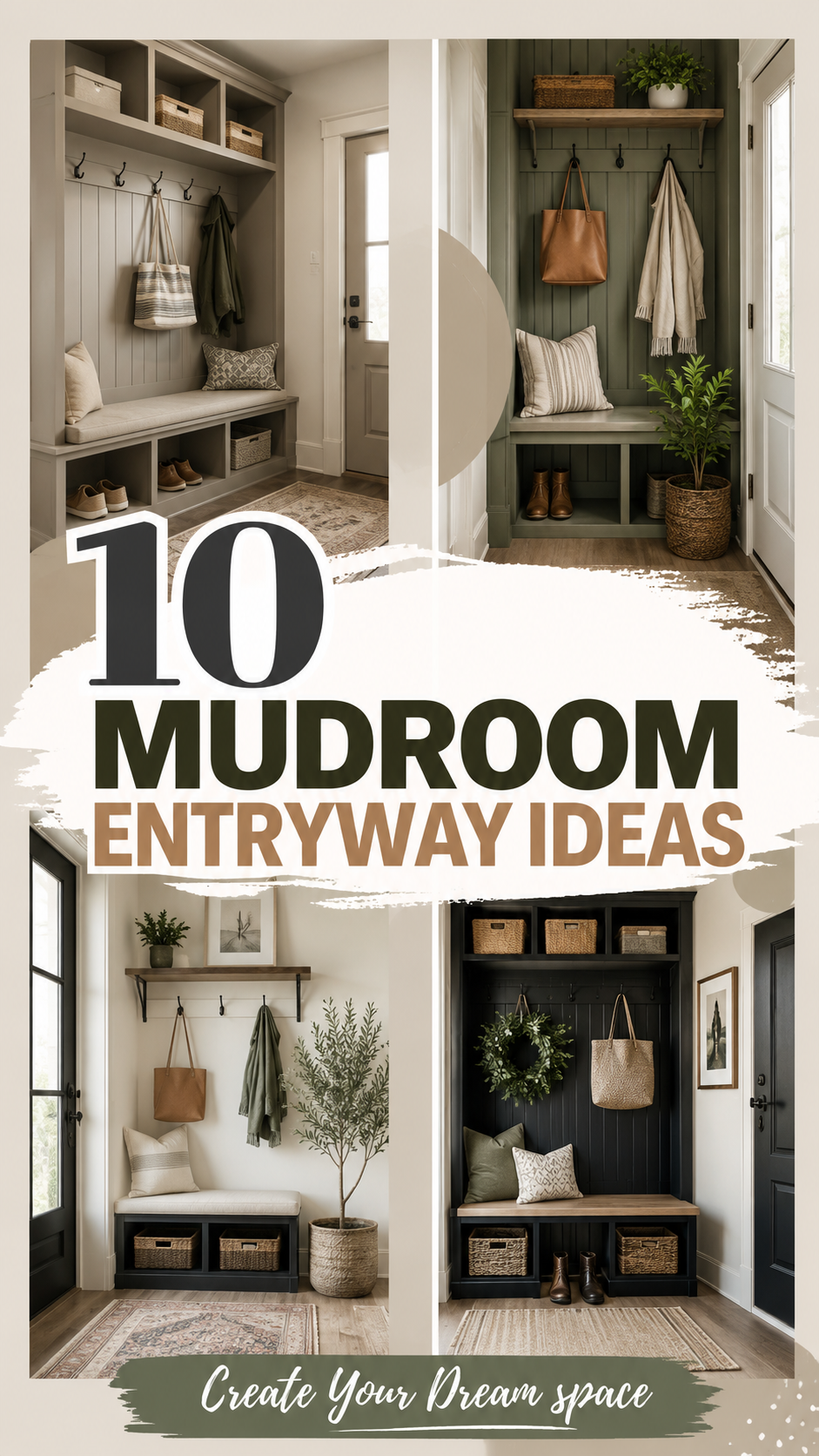
Your entryway is the first thing guests see and the last thing you look at before you leave the house. So why does it usually end up as a dumping ground for shoes, mail, and mystery keys?
A good mudroom fixes that. It’s not about being fancy. It’s about giving every coat, boot, and backpack a home so your front door stops looking like a lost and found.
Here are 10 ideas that turn a chaotic entry into a space that actually functions, styled well enough that you won’t want to hide it.
1. The Built-In Bench With Storage
A bench with cubbies underneath is the backbone of almost every good mudroom. You sit down, pull off your shoes, and stash them right there.
Why it works: Kids can reach their own cubby. Adults get a place to sit while wrestling with boots.
2. A Wall of Hooks (Not Just One Row)
One row of hooks fills up fast. Stagger them at two heights so coats, bags, and dog leashes each get their own spot.
Brass or matte black hooks add a little polish without trying too hard.
3. Baskets for the Stuff That Doesn’t Have a Home
Gloves, hats, sunscreen, dog treats. Every house has random small items that need a landing spot. Woven baskets hide the mess and still look intentional.
4. A Boot Tray Near the Door
Mud season is not optional in most climates. A simple tray by the door catches dirt and water before it hits your floors.
5. A Full-Length Mirror
This one gets skipped constantly. A mirror by the door means one last outfit check before you leave and it makes a small entryway feel bigger.
6. Durable, Washable Rugs
Skip anything delicate here. A flat-weave or washable rug handles wet boots and muddy paws without falling apart in a month.
7. Labeled Cubbies for Each Family Member
Give every person their own labeled spot. This one small change cuts down on the “where’s my backpack” chaos more than almost anything else on this list.
8. Open Shelving Above the Hooks
The space above your hooks is wasted real estate. Add a shelf for baskets, seasonal gear, or decorative pieces that make the space feel finished.
9. A Charging Station
Keys, phones, and mail all need a spot too. A small tray with a hidden outlet keeps cords from turning into a tangled mess.
10. A Statement Light Fixture
Most entryways get one boring overhead bulb. Swap it for a pendant or flush mount with personality. It’s a small change that makes the whole space feel designed on purpose.
What You’ll Need
- Storage bench with cubbies
- Wall hooks (6 to 10, mixed heights)
- 2 to 3 woven baskets
- Boot tray
- Full-length or medium wall mirror
- Washable flat-weave rug
- Labels or small nameplates for cubbies
- Floating shelf
- Charging tray or small console with outlet access
- Statement light fixture (pendant or flush mount)
- Command hooks or wall anchors for mounting
Tools You’ll Need (If You’re DIYing Any of This)
- Drill and drill bits
- Stud finder
- Level
- Screwdriver
- Measuring tape
- Wall anchors and screws
- Pencil for marking placement
Pro Styling Tips
1. Mix textures, not just colors. Woven baskets, matte metal hooks, and a soft rug together look far more intentional than one flat finish everywhere.
2. Keep the color palette to three tones max. Entryways are small. Too many colors make them feel cluttered even when they’re tidy.
3. Hang hooks at kid height too. If you have kids, a lower row means they can actually use the space instead of dropping everything on the floor.
4. Leave breathing room on shelves. A shelf packed edge to edge reads as clutter, not decor. Leave gaps.
5. Light it properly. Entryways are often dim. A stronger bulb or an added sconce makes a huge difference in how put together the space feels.
Substitutions and Variations
| Element | Budget Swap | Small Space Version | Large Space Version |
|---|---|---|---|
| Bench | Repurposed dresser or thrifted bench | Wall-mounted fold-down bench | Full built-in bench with cushion |
| Hooks | Command hooks | 4 to 5 hooks only | Full pegboard wall |
| Rug | Dollar store runner | Small mat by the door | Full runner plus boot tray |
| Storage | Cardboard bins covered in fabric | One small basket | Cubby system with labeled bins |
| Lighting | Swap the bulb only | Small flush mount | Statement pendant |
Style variations:
- Farmhouse: shiplap wall, black hooks, woven baskets, neutral rug
- Modern minimalist: floating shelf, one clean bench, no visual clutter
- Boho: layered rugs, rattan baskets, warm wood tones
- Coastal: white and blue tones, rope details, light wood
Make Ahead / Prep Tips
- Measure your entryway wall before buying anything. Hooks and shelves need real spacing, not guesswork.
- Order furniture at least two weeks ahead if it needs assembly or shipping.
- Sort through current entryway clutter first. Donate or toss before you add new storage.
- Find your studs with a stud finder before mounting anything heavy.
Step-by-Step: How to Put It Together
- Clear the space completely. Start from zero so you can see what you’re actually working with.
- Measure and mark hook placement. Space hooks 6 to 8 inches apart at two different heights.
- Mount the bench first. Everything else gets built around it.
- Install hooks and shelving. Use a level so nothing sits crooked.
- Add the rug and boot tray. Place the tray closest to the door.
- Style the shelf and baskets. Group items in odd numbers (3 works best) for a natural look.
- Add the mirror and light fixture last. These finishing touches make the whole space feel done.
Maintenance and Upkeep
- Shake out or vacuum the rug weekly, more often in wet seasons.
- Wipe down the boot tray after muddy days so water doesn’t sit.
- Do a five-minute basket reset every Sunday. Small habit, big payoff.
- Check hooks and shelves every few months to make sure hardware hasn’t loosened.
- Rotate seasonal items (mittens, sunscreen, umbrellas) so only what’s relevant is out.
FAQ
Do I need a mudroom bench if my entryway is tiny? No. A wall-mounted fold-down bench or even a small stool works fine in tight spaces.
What’s the best flooring for a mudroom? Tile, vinyl, or sealed wood hold up best against water and mud. Avoid carpet directly by the door.
How do I stop shoes from piling up on the floor? Add a boot tray plus a visible shoe rack or open cubby. If storage isn’t visible and easy, people won’t use it.
Can I create a mudroom look without a dedicated room? Yes. A hallway, closet, or even a corner near the front door can work with the right hooks, bench, and storage.
What paint colors work best for small entryways? Lighter, warm neutrals make small spaces feel bigger. Save darker tones for larger entryways with more natural light.
Wrapping Up
A mudroom doesn’t need to be big or expensive to work. It just needs a system that matches how your household actually moves through the door every day.
Start with one or two ideas from this list, not all ten at once. Small changes add up fast.
Which idea are you trying first? Drop a comment and let me know, or tell me what your entryway struggles with most. I read every one.