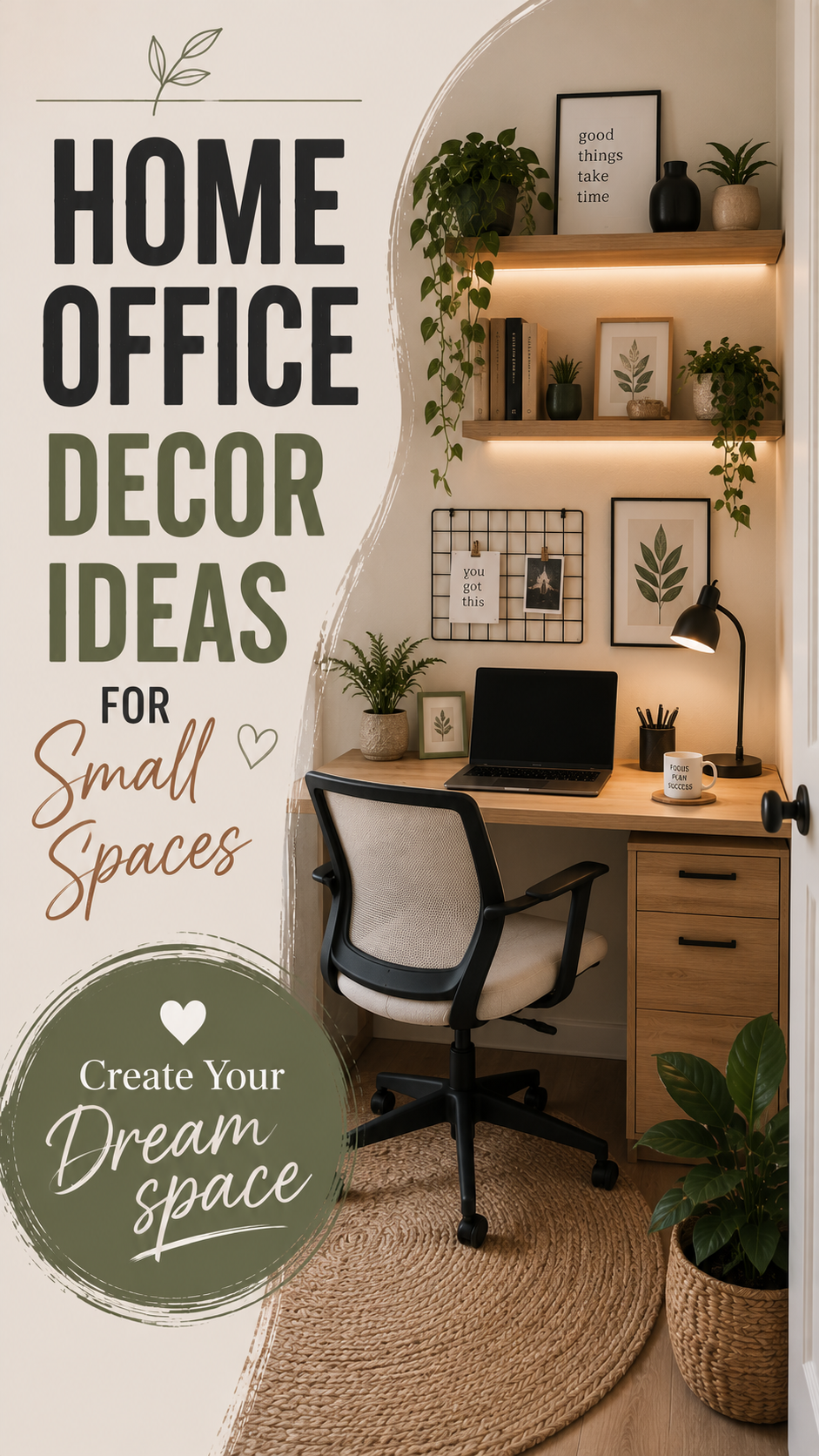
You don’t need a spare room to have a real home office. You need about 15 square feet and a plan.
That’s it. That’s the whole secret.
Most “small space office” advice online is just a picture of a desk in a corner with zero explanation of how to make it functional, cozy, and not depressing to sit in for eight hours a day. So let’s fix that.
This is a full walkthrough. What to buy, what to skip, how to style it, and how to keep it from turning into a junk pile by week three (we’ve all been there).
What You’ll Need
- A compact desk (floating, folding, or narrow console style)
- An ergonomic chair that fits the scale of the desk
- Vertical storage (wall shelves, a pegboard, or a slim bookcase)
- Task lighting (a desk lamp with adjustable brightness)
- A power strip or cable management tray
- A small rug to anchor the space
- Wall art or a corkboard/vision board
- Desktop organizers (trays, cups, or drawer dividers)
- Plants (real or faux, at least one)
- A monitor riser or laptop stand
Pro Styling Tips
1. Go vertical, not horizontal. Small spaces lose the battle when you try to spread out. Win it by building up. Shelves above your desk do more work than a wider desk ever could.
2. Pick one accent color, max two. A tiny space with five colors reads as clutter, even if it’s clean. One accent color (say, terracotta or sage) ties everything together instantly.
3. Mirror the wall behind your desk if you’re on video calls a lot. It bounces light and makes the room look twice as big on camera. Small trick, big payoff.
4. Let your storage be the decor. Open shelving with pretty boxes, books turned spine-in for texture, a few plants — that’s styling without adding a single extra item.
5. Anchor with a rug even in a tiny nook. It sounds unnecessary in an 8×8 space, but it visually separates “office” from “hallway” or “bedroom corner,” and that separation matters more than you’d think for focus.
Tools You’ll Need (If Any DIY Is Involved)
- Drill and wall anchors (for shelves or a floating desk)
- Level
- Stud finder
- Measuring tape
- Screwdriver
- Command strips (for renters — no drilling required)
Substitutions and Variations
| Item | Budget Swap | Upgrade Swap | Small Space Version |
|---|---|---|---|
| Desk | Fold-down wall desk | Solid wood console | Corner floating shelf desk |
| Chair | Repurposed dining chair with cushion | Ergonomic mesh chair | Armless slim chair |
| Storage | Cube organizers from a big box store | Custom built-ins | Over-the-door pocket organizer |
| Lighting | Clip-on desk lamp | Brass articulating lamp | LED strip under shelving |
| Rug | Small flatweave mat | Wool area rug | Round rug (visually smaller footprint) |
Renters: skip anything requiring drilling. Command strips, tension rods, and freestanding shelves are your best friends.
Tiny apartment version: a closet, stair landing, or even a wide hallway nook can become an office with a fold-down desk and a wall shelf. You genuinely don’t need a room.
Make Ahead / Prep Tips
- Measure your space before buying anything. Small space furniture has almost no margin for error.
- Order shelving and desk hardware at least a week ahead so you’re not stalled mid-project waiting on shipping.
- Sketch a rough layout, even a bad one on your phone’s notes app. It saves you from buying a desk that blocks a door.
- Declutter the space fully before decorating it. You cannot style over existing chaos.
Budget Breakdown
| Category | Budget Range |
|---|---|
| Desk | $60–$250 |
| Chair | $50–$200 |
| Storage/shelving | $30–$150 |
| Lighting | $20–$80 |
| Decor (rug, art, plants) | $40–$120 |
| Total | $200–$800 |
You can absolutely do this for under $150 if you shop secondhand or already own a chair.
Step-by-Step: How to Set Up Your Small Home Office
Step 1: Pick the Spot
Look for natural light first, wall space second. A window nearby will save you money on lighting and mood.
Step 2: Measure Everything
Width, depth, and height. Include door swing and walking clearance. Even 6 inches matters in a small footprint.
Step 3: Choose Your Desk
Floating desks save the most floor space. Folding desks work if the office needs to disappear at night. Narrow consoles look the most “finished” if you have the depth for one.
Step 4: Mount Your Storage
Install shelves or a pegboard before placing the desk underneath. It’s much easier to drill into an open wall.
Step 5: Set Up Lighting
Combine one ambient source (a lamp) with one task source (an adjustable desk light). Avoid relying on overhead light alone. It flattens the whole room.
Step 6: Style the Surfaces
Group items in odd numbers (three, not two). Leave at least 30% of your desk surface empty. A packed desk photographs busy and feels busier to work at.
Step 7: Add the Finishing Touches
Rug down, art up, one plant on the desk or shelf. Done.
Style Variations
Boho: rattan chair, woven wall hanging, warm wood tones, layered textures.
Minimalist: white or light wood desk, one plant, one piece of art, hidden storage only.
Farmhouse: distressed wood desk, wire baskets for storage, neutral linen accents.
Modern: black metal frame desk, geometric shelving, monochrome color palette.
Room Pairing Suggestions
A small office nook pairs well tucked into:
- A bedroom corner (use a room divider or curtain to separate “work” from “sleep”)
- A living room alcove
- Under a staircase
- A closet with the doors removed (“cloffice” setups are genuinely popular for a reason)
Maintenance and Upkeep
- Reset your desk surface at the end of each workday. Thirty seconds now saves twenty minutes later.
- Dust shelves weekly. Small spaces show dust fast because everything sits closer to eye level.
- Rotate decor seasonally instead of buying new pieces constantly. Swap a pillow, a plant, or a print and the whole space feels refreshed.
- Check cable management monthly. Cords multiply. It’s a mystery of the universe.
FAQ
Do I really need a rug in such a small space? Yes. It defines the zone and adds warmth without taking up wall or shelf space.
What’s the smallest desk size that’s actually usable? Around 24 inches wide by 16 inches deep works for a laptop-only setup. Add depth if you need a monitor.
How do I hide my office when I’m not working? A fold-down desk, a curtain on a tension rod, or a tall folding screen all work well for visually closing off the space.
Can I make a small office feel bigger without knocking down walls? Light colors, one large mirror, and vertical storage do most of the heavy lifting here.
What’s the biggest mistake people make in small home offices? Buying furniture before measuring. It’s the number one reason small space setups fail.
Wrapping Up
A small office isn’t a compromise. It’s just a different set of rules, and once you know them, the whole thing comes together fast.
Start with the spot, measure twice, go vertical, and let your storage double as your decor. That’s really all it takes.
If you set one up, drop a comment and tell me what corner of your home became your office. I’d love to see what you did with it.