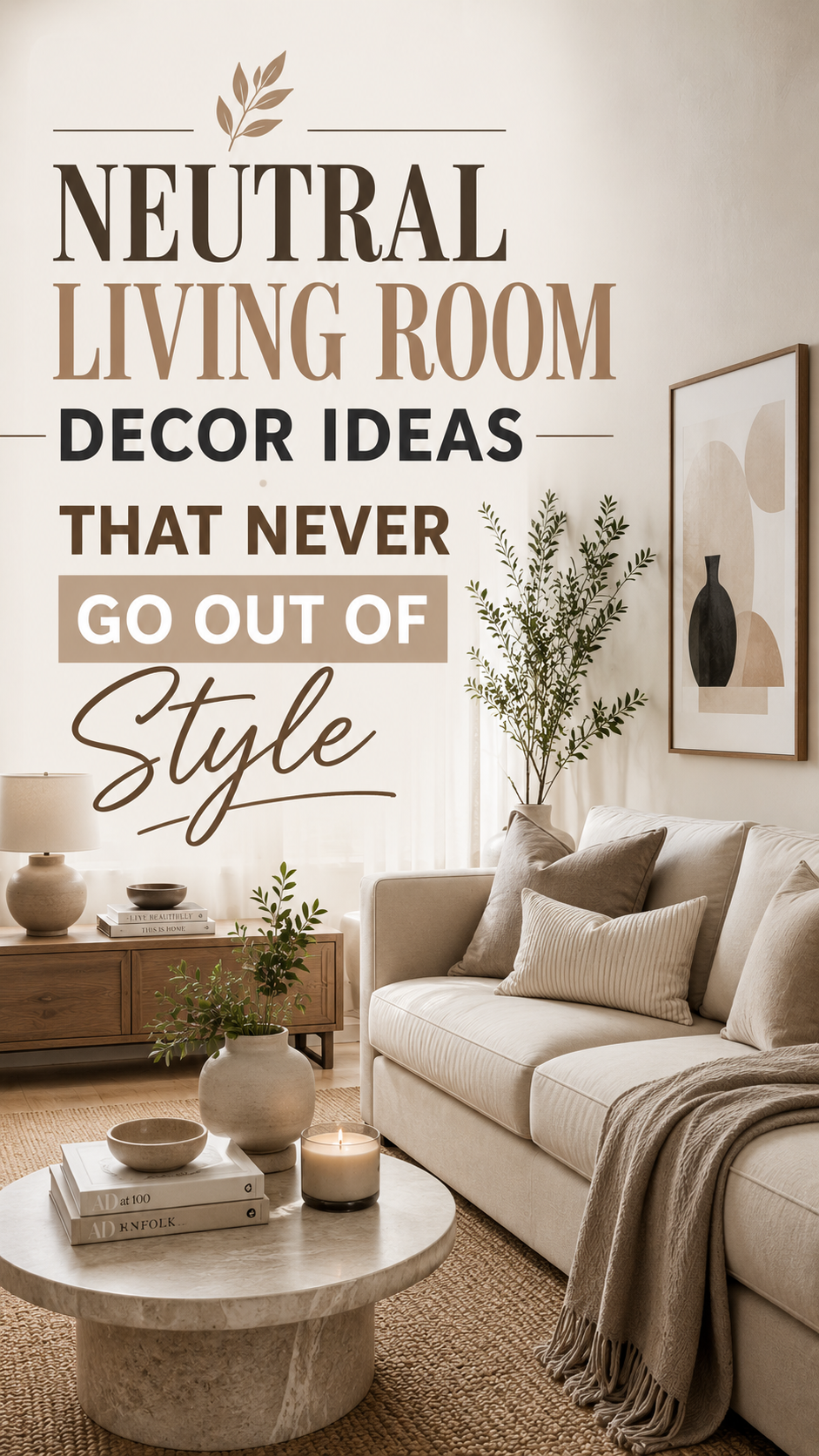
Why does every “timeless” living room you scroll past look… neutral?
It’s not an accident. Neutral rooms don’t compete with your life. They let the light change the mood, let your mood change the room, and never make you feel like you’re trapped inside someone else’s trend.
But neutral doesn’t mean boring, and it definitely doesn’t mean beige everything. Done right, a neutral living room feels layered, warm, and a little different every time you walk into it. Done wrong, it feels like a waiting room.
Here’s how to land on the right side of that line. 🤎
What You’ll Need
- Sofa in a warm neutral (cream, oatmeal, greige, or soft taupe)
- 1 to 2 accent chairs in a complementary tone or texture
- Wood or stone coffee table
- Layered area rugs (a jute base rug plus a smaller patterned or textured rug on top)
- 4 to 6 throw pillows in varying neutral shades and textures
- 2 throw blankets (one chunky knit, one linen)
- Warm-toned floor lamp and a table lamp
- Wall art or a large mirror
- Woven baskets for storage
- A mix of textured vases, bowls, or trays for the coffee table
- Greenery: a large plant plus one or two smaller ones
- Curtains in linen or cotton, close to your wall color
- Wood or rattan side table
Tools You Might Need
- Measuring tape
- Level
- Stud finder
- Hammer or drill
- Wall anchors or picture hooks
Pro Styling Tips
1. Layer at least three shades of neutral. One flat neutral color reads as empty. Three or more shades of cream, tan, and brown reads as designed.
2. Texture is your color palette. Boucle, linen, jute, wood grain, and leather all count as “color” in a neutral room. Mix as many as you can.
3. Add one warm metal finish. Brass, bronze, or warm gold on lamps or frames keeps the room from feeling flat or too cool-toned.
4. Don’t skip pattern entirely. A subtle stripe, herringbone weave, or tonal print adds interest without breaking the neutral rule.
5. Let natural light lead your color choices. North-facing rooms lean cooler and benefit from warmer neutrals. South-facing rooms can handle cooler, grayer tones.
Substitutions and Variations
| Element | Budget Swap | Small Space Version | Large Space Version |
|---|---|---|---|
| Sofa | Slipcovered sofa you already own | Loveseat or apartment-size sofa | Sectional with a chaise |
| Rug layering | One rug with a busy weave instead of two layered rugs | Single rug sized to the seating area | Jute rug plus a wool rug on top |
| Accent chair | Thrifted chair reupholstered in linen | Skip it, add a floor pillow instead | Two matching accent chairs |
| Art | DIY abstract art on canvas | One medium piece above the sofa | Gallery wall mixing frames and mirrors |
| Lighting | Warm bulb swap in current lamps | Wall-mounted sconces | Statement floor lamp plus pendant light |
Style variations to try:
- Warm minimalism: Fewer pieces, more texture, one plant, one lamp.
- Modern organic: Add curved furniture, rattan, and rounded mirrors.
- Coastal neutral: Bring in whitewashed wood, linen, and a hint of blue-gray.
Make Ahead / Prep Tips
- Pull paint swatches and hold them against your walls at different times of day.
- Measure your rug area and mark it with tape before ordering.
- Order the sofa and any large furniture first, since these usually take the longest.
- Collect fabric or material swatches for pillows and throws before buying anything.
- Photograph the room as-is so you can track your progress.
Step-by-Step: How to Get the Look
Step 1: Choose Your Base Neutral
Pick one dominant tone (cream, taupe, or greige) for your largest pieces like the sofa and rug.
Step 2: Layer the Rugs
Start with a flat jute or sisal rug as your base, then add a smaller textured or patterned rug on top, centered under the coffee table.
Step 3: Place the Sofa and Chairs
Arrange seating to face each other or create a natural conversation area, leaving 30 to 36 inches of walking space.
Step 4: Add the Coffee Table
Center it in front of the sofa with about 14 to 18 inches of clearance.
Step 5: Bring in Lighting
Add a floor lamp near your reading spot and a table lamp on a side table. Use warm bulbs (2700K to 3000K).
Step 6: Style with Texture
Mix pillow fabrics: one linen, one boucle, one knit. Add a chunky throw draped over the arm of the sofa or chair.
Step 7: Add Warmth with Metal and Wood
Bring in a wood side table, a brass lamp base, or a wood-framed mirror.
Step 8: Finish with Greenery and Art
Add one large plant near a window and hang art at eye level above the sofa.
Maintenance and Upkeep
- Vacuum layered rugs weekly since they trap more dust than a single flat rug.
- Fluff and rotate pillows every few days so they hold their shape.
- Dust wood and metal surfaces weekly with a dry microfiber cloth.
- Wash removable pillow covers and throws monthly.
- Rotate plants toward the light every couple of weeks so they grow evenly.
FAQ
Will a neutral room feel boring over time? Not if you layer texture and swap small accents seasonally. The base stays timeless while pillows, throws, and art can change.
What’s the difference between neutral and beige decor? Beige is one color. Neutral decor mixes multiple tones like cream, taupe, gray, and brown across different textures.
Do I need white walls for this to work? No. Warm off-white, soft greige, or light taupe walls all work well and often photograph better than stark white.
How do I keep a neutral room from feeling cold? Add warm wood tones, brass accents, and layered textiles like wool and linen.
Can I add color later if I want to? Yes. A neutral base is the easiest style to add a pop of color to later through pillows, art, or a single accent piece.
Wrapping Up
A neutral living room isn’t about playing it safe. It’s about building a space that adapts to you instead of the other way around.
Start with your base color, layer in texture, and add warmth wherever you can. The room will feel finished long before you think it is.
Have you decorated a neutral living room before? Share what colors or textures worked for you in the comments.